by Carole Dean
There’s a hard truth many filmmakers are finally beginning to accept: making the film is no longer the finish line. In today’s landscape, finishing your film is only the beginning of another equally demanding creative act—finding the audience that will care about it.
For years, independent filmmakers held onto the hope that once a great film was completed, the right distributor would appear, write a check, and carry the project into the world. That dream still exists for a tiny fraction of films, but for the overwhelming majority, the rules have changed.
And perhaps the most important shift is this: filmmakers can no longer afford to think about distribution after the film is finished.
Recently, on the Art of Film Funding Podcast, Claire Papin and I spoke with one of the most respected voices in film distribution, Jon Reiss, founder of Eight Above and author of Think Outside the Box Office.
What Jon shared was both sobering and deeply empowering. He didn’t offer easy answers or empty optimism. Instead, he gave filmmakers something far more valuable: clarity.
The Landscape Has Changed—And Filmmakers Must Change With It
Jon described today’s distribution environment in a few words: “challenging, but hopeful”
He also emphasized that despite the difficulties, there is still opportunity for filmmakers willing to rethink their approach.
The industry has shifted dramatically. Revenue streams have narrowed. Streamers are acquiring fewer independent films. Traditional funding ecosystems have weakened. Attention itself has become one of the most contested resources in the world.
As he explained, filmmakers are no longer competing only with other films. They are competing with social media, games, podcasts, books, music, and endless digital content for the audience’s most precious resource: time.
That reality can feel discouraging at first. But I believe it also invites filmmakers into a deeper level of intentionality.
Because when audiences do give you their attention today, it means something profound. It means your work connected emotionally, spiritually, or intellectually in a crowded and noisy world.
And that kind of connection does not happen accidentally.
Distribution Must Begin at the Beginning
One of the most important points Jon made was that filmmakers need to start thinking about distribution during the earliest stages of development—not after the film is completed.
I have been encouraging filmmakers to think this way for years, especially documentary filmmakers who may spend five, six, or even ten years making a project.
If you are willing to devote years of your life to a film, then you must also ask yourself:
Who needs this story?
Who is waiting for it?
Who will carry it forward once it exists?
Jon put it very directly:
“The other 99.99% of filmmakers need to make a plan.”
That plan is not about limiting creativity. It is about supporting it.
Too many filmmakers separate art from audience, as if thinking about viewers somehow contaminates the purity of the work. But audiences are not obstacles to creativity—they are the reason stories matter.
When you understand the people your film is for, your creative choices often become clearer, stronger, and more focused.
The Missing Budget Most Filmmakers Forget
One of the most practical insights Jon shared involved budgeting.
He urged filmmakers to build distribution and marketing costs into the project from the very beginning.
I cannot stress enough how important this is.
Many filmmakers spend every dollar getting the film made and then arrive at the finish line exhausted, with no resources left to help the film reach audiences.
Jon introduced a concept he calls “the new 50-50”:
“50% of your time, money, and energy should go into making the film, and 50% should go into connecting that film to an audience.”
That idea may initially sound extreme to filmmakers trained to think only about production. But the truth is, a film that cannot reach audiences cannot fulfill its purpose.
Jon emphasized that it is not a hard and fast rule – but a way to get filmmakers to shift their mindset about the role of distribution. This does not mean every filmmaker needs a massive advertising budget. Filmmakers must begin treating outreach, engagement, and audience-building as essential creative work—not as an afterthought.
Find the Audience That Is Waiting for You
One of the most encouraging parts of our conversation was hearing Jon describe how underserved audiences can become powerful allies for filmmakers.
He shared the example of The Librarians, a documentary about librarians confronting book banning across America.
Because the film directly addressed a community hungry to have its story told, those audiences became passionate advocates. Librarians organized screenings, spread the word, and helped the film grow organically across hundreds of communities.
There is an important lesson here for all filmmakers.
You do not need everyone.
You need the right people.
Many filmmakers waste enormous energy trying to appeal broadly instead of deeply. But deeply engaged audiences are far more powerful than passive mass attention.
When your film genuinely serves a community, those viewers often become ambassadors for the work.
That kind of relationship cannot be manufactured through marketing tricks. It comes from authenticity, specificity, and trust.
Audience Building Is Career Building
Jon also emphasized that audience-building should not only serve one film—it should support an entire creative life.
This is something filmmakers often overlook.
Every project is an opportunity to build ongoing relationships with audiences who connect with your voice, your themes, your values, and your perspective.
Even if your films vary in subject matter, there is usually a deeper through-line that connects them: your curiosity, your emotional lens, your sense of justice, your humor, your visual style, or your humanity.
People are not only following films anymore.
They are following filmmakers.
That means your process matters. Your communication matters. Your willingness to engage matters.
And yes, for many filmmakers, this can feel uncomfortable.
Not everyone enjoys social media or self-promotion. Jon acknowledged this honestly and suggested something practical:
“If you can’t do the social media and marketing, then bring someone on your team who is facile with social media.”
This is an important mindset shift.
You do not have to do everything alone.
In fact, trying to do everything alone is often what burns filmmakers out.
The Power of Community Around Your Film
One concept I especially loved was Jon’s discussion of the “community producer.”
This role goes beyond traditional marketing. A community producer helps cultivate relationships between the film and the people it serves.
That is where independent filmmaking becomes truly alive.
Films are not simply products to be consumed. At their best, they become gathering points for conversation, healing, awareness, and connection.
And filmmakers themselves need community too.
Jon spoke beautifully about how filmmakers in his Distribution Lab continue supporting one another long after the program ends.
That matters deeply.
Because distribution can feel isolating. Rejection can feel personal. The constant pressure to promote can exhaust even the strongest artists.
But filmmakers grow stronger when they share knowledge, resources, and encouragement with one another.
Practical Steps Filmmakers Can Take Right Now
If you are in development, production, or post-production, here are a few practical actions you can begin immediately:
Identify Your Core Audience
Ask yourself who most urgently needs this story. Be specific.
Build Relationships Early
Start conversations with communities, organizations, or audiences connected to your subject matter long before the film is finished.
Create a Distribution Budget
Even if the numbers feel intimidating, include distribution and marketing in your financial planning from day one.
Collect Audience Information
Email lists remain one of the most valuable tools filmmakers can own. Start building yours now.
Bring the Right People Onto Your Team
If marketing is not your strength, collaborate with people who genuinely understand audience engagement.
Think Beyond One Film
Every project should help strengthen your long-term creative ecosystem and audience relationships.
The Future Belongs to Filmmakers Who Adapt
What I appreciated most about his perspective was that he never separated practical strategy from creative purpose.
He understands that filmmakers are artists. But he also understands that sustainability requires adaptation.
The filmmakers who survive this era will not necessarily be the ones with the biggest budgets or the loudest campaigns.
They will be the ones willing to stay awake, flexible, intentional, and connected to the people they serve.
There is no perfect formula anymore. But there is still enormous possibility for filmmakers who are willing to think differently.
And perhaps that is the deeper invitation of this moment.
Not simply to make films.
But to build meaningful relationships around the stories we choose to tell.
When filmmakers align creativity with clarity, community, and purpose, they stop waiting for permission from the industry—and begin creating sustainable paths forward on their own terms.
A Resource Every Filmmaker Should Explore
Before we ended our conversation, I wanted to acknowledge something I personally value tremendously—Jon Reiss’s Substack.
It’s one of the few resources on distribution that consistently goes beyond surface advice. Jon doesn’t stay in vague generalities. He gets into the real mechanics of audience-building, release strategy, community engagement, and the constantly shifting realities filmmakers are facing right now.
As I shared with Jon during the interview:
“It’s full of guidance. You get to the nitty-gritty. You don’t give us this wide area—you hone in on important things. Guidance is what I’ve been looking for, and it’s always there.”
What makes the Substack especially valuable is that it grows directly out of Jon’s real-world work releasing films, consulting with filmmakers, and leading his Distribution Lab. As John explained:
“We do releases and so we experiment with different things during the releases, then we do case studies those releases. It also informs other things that I write about on the Substack, as well as also in what we teach in the distribution lab.”
Jon has generously offered our audience a free six-month subscription to his Substack, which includes case studies, tools, and practical distribution insights filmmakers can immediately apply to their own projects.
To receive the free six months:
-
- Use this link: https://jonreiss.substack.com/subscribe?coupon=544beac3
-
- The offer is available through May 16
It’s a generous gift from Jon and an excellent opportunity for filmmakers who want grounded, intelligent guidance on navigating today’s distribution landscape. Click here if you are interested in Jon’s Distribution Lab.
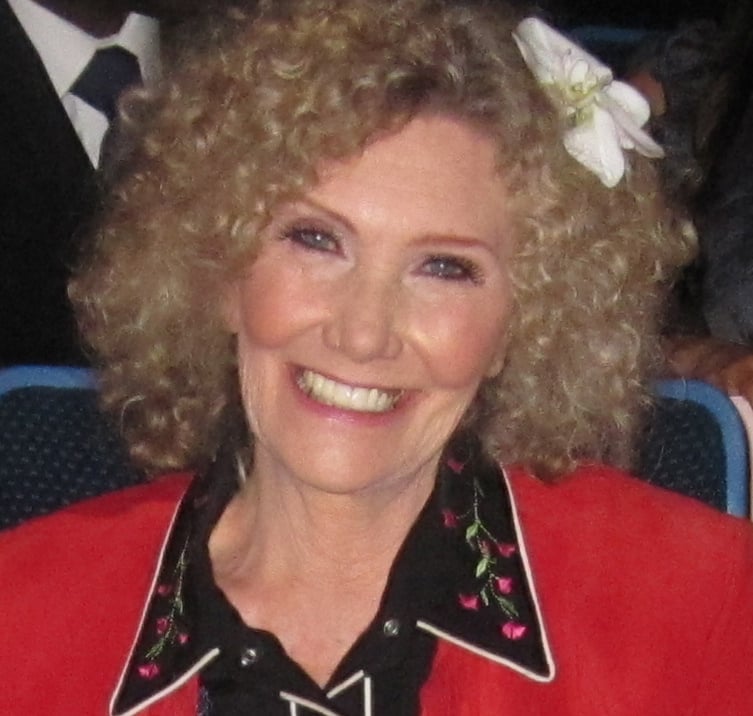
Carole Dean is president and founder of From the Heart Productions; a 501(c)3 non-profit that offers the Roy W. Dean Film Grants and fiscal sponsorship for independent filmmakers.
She is creator and instructor of Learn Producing: The Ultimate Course for Indie Film Production. Essential classes for indie filmmakers on how to produce their films.
She hosts the weekly podcast, The Art of Film Funding, interviewing those involved in all aspects of indie film production. She is also the author of The Art of Film Funding, 2nd Edition: Alternative Financing Concepts. See IMDB for producing credits