What independent film funding and distribution strategy really looks like when filmmakers commit to their story, their audience, and their voice
by Carole Dean
What if the key to funding your film — and sustaining a filmmaking career over decades — isn’t about waiting for the right door to open, but about building your own door entirely?

I’ve spent years watching filmmakers stall. They apply for a handful of grants, then sit back and hope. Often, a cut is finished without ever being tested on real audiences. And in many cases, the film is handed over to a distributor—only to land on a streaming platform where it earns forty cents per view and quietly disappears. And when I ask them what’s next, they shrug.
Then there are filmmakers like Mike Camoin.
Mike is an award-winning director, producer, and one of the most tenacious advocates for independent cinema I’ve come across. His documentary Sallie May Not: Exposing America’s Student Loan Scam won the Audience Choice Award at the Whistleblowers Summit and Film Festival. His work has connected him to screenings at Sundance, Tribeca, Cannes, and Toronto.
He helped ignite the independent film movement in upstate New York — including playing a direct role in bringing about New York State’s first film tax incentive legislation. And right now, he’s deep in post-production on his docuseries Brown and White: The Heart of Bona’s Basketball.
I recently had the pleasure of sitting down with Mike on the Art of Film Funding podcast, and what he shared that day didn’t just inspire me — it reframed what it truly means to be an independent filmmaker in today’s world.
The Story That Won’t Let You Go
Every filmmaker I’ve admired deeply has described the same phenomenon: the story that finds you and refuses to leave.
For Mike, it began when he learned what happened to student loan borrowers after the U.S. government removed consumer protections from their loans — first for public loans in 1998, then private loans in 2005. He met borrower after borrower who had taken out $70,000 in student loans, paid back $75,000, and somehow still owed $70,000 more.
“When you start to experience the injustice that others are experiencing,” Mike told me, “That’s what gets you hooked onto a subject, and it keeps you at it for years and years.”
That hook isn’t just an emotional pull — it’s the fuel that keeps a filmmaker going through the inevitable years of difficulty that serious documentary work demands. Mike’s first film took six years. Sallie May Not took years more. His mentor, director Jennifer Fox, once told him that documentaries take on average seven years. He didn’t dismiss that. He accepted it as part of the work.
What I want every filmmaker reading this to sit with is this: the story that demands your time and sacrifice is the one worth making. If you’re feeling uncertain about whether a project deserves years of your life, ask yourself Mike’s question — does this injustice, this story, this truth get under your skin and refuse to let go? If it does, you already have your answer.
Act Like You’ve Been There Before
When I asked Mike what independent filmmakers most misunderstand about major festivals — Sundance, Tribeca, Cannes, Toronto — his answer surprised me with its simplicity.
“Act like you’ve been there before. Act like you belong.”
Mike is largely self-taught. He didn’t go to graduate school for film. And yet he found himself at the closing party for The Place Beyond the Pines in Toronto, in the same room as Bradley Cooper, Ryan Gosling, and Eva Mendes. Not because he forced his way in — but because his work and his confidence earned him a seat at the table.
Confidence, I’ve always believed, is a form of creative currency. People are drawn to filmmakers who move through the world with authority and clarity. As I told Mike during our conversation, when people start coming to you for advice at a festival, when strangers assume you know how things work — that’s a signal you’re in the right energy. You’ve stepped into your own.
This isn’t about pretending. It’s about recognizing what your skills and dedication have actually produced, and carrying that recognition with you into every room.
Don’t Wait for Permission to Distribute Your Film
Here’s something I hear from distributors again and again: independent filmmakers make one of their biggest mistakes by locking picture too quickly, without enough audience feedback, and then handing the film off hoping someone else will figure out how to reach people.
Mike takes a completely different approach. He doesn’t wait to be discovered. He builds the audience himself.
His self-distribution model started with his first film, Inside the Blue Line, placing VHS copies — and later DVDs — in fifty gift shops across upstate New York. Mike held screenings in firehouses, libraries, and four-wall theater rentals. He studied with self-distribution teachers like Barbara Zimmerman, making documentaries with Doug Block and Jennifer Fox. He wrote press releases so thorough and usable that newspapers would run them almost verbatim — because he understood that when you make a journalist’s job easy, your story gets told.
“Nearly a hundred percent of the time,” Mike said, “every time I had a screening, that led to another screening.”
That word of mouth, built over time through real community engagement, is still bearing fruit. His first documentary from 1998? He’s still selling copies of it today.
The lesson here is clear: theatrical and communal screenings aren’t a nostalgic indulgence. They’re a business strategy. They create donors, champions, and audiences who tell other people. They build the foundation your film needs to live for more than a year.
Fundraising Has a Structure — Learn It
One of the most important things Mike said during our conversation was this: “Fundraising is one of the scarier things to do in life. But if you don’t do it, your movie’s likely not going to happen.”
He’s right. And yet I watch filmmakers treat fundraising like a passive activity — apply for four or five grants, then wait. That’s not a fundraising strategy. That’s hope.
Mike has studied with fundraising coach Joanne Butcher, and he applies her framework with discipline. Butcher discusses seven ways to fund a film, and grants are only one of them. There’s crowdfunding, major donors, foundations, repeat donors, underwriting, earned income from screenings, fiscal sponsorship, pre-sales, and more. Mike has learned not to rely on any single source — and more importantly, he’s learned to go back to people who have already donated.
“Major donors like to become repeat donors,” he told me. “They watch what you’re doing and they follow along — and then they may even do more.”
Engagement Turns Donors Into Long-Term Partners
I’ve witnessed this over and over from my own seat at From the Heart Productions. Donors who believe in you will keep giving if you keep them engaged and excited about the work. Mike’s email updates for his documentary Brown and White: The Heart of Bona’s Basketball are some of the most infectious fundraising communications I receive. They read like dispatches from someone on a mission. Because they are.
And here is the practical key Mike shared that I want every filmmaker to carry with them: give your fundraising a deadline. Don’t raise money in the abstract.
Say instead, “I want to submit to Sundance by August 2026, and I need $300,000 to get there.” That kind of clarity — a specific goal, a specific reason, a specific date — is what activates donors and activates you.
Test Your Film Before You Lock It
Distributors have told me plainly: filmmakers stop editing too soon. They know their material so deeply that they can no longer see it through a stranger’s eyes. The result is a film that speaks to insiders but loses everyone else.
Mike builds audience testing directly into his post-production process. For Brown and White, he’s screened rough cuts for multiple different groups: fans who already know the story, donors who are following the project, and people who know nothing about it at all — including his son and five of his friends, who represent a completely different demographic.
Each group teaches him something different. And sometimes the most important feedback doesn’t come from audiences at all.
“I noticed I got tired at 40 minutes in,” he told me. “I’m fighting against my own movie.” His team felt the same. That honest internal response led them to restructure the first episode, ending it at the 34-minute mark and letting the second half breathe in the next episode.
If you’re tired of your own film during an edit session, that’s not a weakness — it’s data. Trust it. Your audience will feel everything you feel, only more so.
Build Your Community Before You Need Them
One of the things that struck me most about Mike’s career is how early and how deliberately he builds community around his projects.
Back in 1995, he co-founded the Upstate Independent Filmmakers Network with Tom Mercer. By 2003 and 2004, they had over 300 members from five different states. That network wasn’t just a social circle — it became the political pressure that helped expand the local film commission, attracted the attention of the New York State Governor’s Film Office, and played a role in the legislation that created New York’s now-legendary film tax incentive program. Eighteen television shows fled California for New York almost overnight.
One filmmaker, building community, changed the landscape for an entire state’s film industry.
For Brown and White, Mike is already identifying strategic partners — the national coaches association behind Coaches vs. Cancer, basketball programs, Catholic alumni networks, community organizations — all of whom have said “let us know when it’s done.” That’s a distribution plan built on genuine alignment, not cold outreach.
“Connecting the dots,” he calls it. And those dots begin the moment you commit to a project, not after you finish it.
Two Feet In — or Stay Home
When Mike’s father — Bob Camoin, an IBM engineer and manager who had built a conventional, successful career to a high level — finally accepted that his son was serious about filmmaking, he gave him a piece of advice I’ve been thinking about ever since.
“If you’re gonna do this,” his father told him, “don’t do this with one foot in and one foot out. Better step in with two feet — all the way.”
This, more than anything, is the dividing line I see between filmmakers who sustain long careers and those who don’t. It’s not talent or access. It’s commitment. The willingness to go all in, to keep moving when the deadline slips, to raise your hand when something needs to be done even if it’s outside your role, to give the spotlight to your collaborators because a great film is never made alone.
Mike also gave a second piece of advice that completes this one perfectly: “Don’t do it alone. Let other people have the spotlight in your vision, in your dream.”
These two things together — full commitment, and generous collaboration — are the foundation of a sustainable creative life.
Persistence of Vision
I’ll end where Mike and I landed near the close of our conversation, with a quote attributed to Orson Welles that Mike offered with deep feeling:
“Filmmaking is all about the persistence of vision.”
It’s the one choice, Mike said, that every filmmaker gets to make. Hold on to your vision for the work. Regardless of the budget, regardless of the setbacks, regardless of the years it takes — your film exists because you refuse to let it go.
Persistence Is a Daily Practice — Not a Grand Gesture
That persistence is not stubbornness. It isn’t ego. Rather, it’s a quiet, daily decision to keep showing up — for your story, your audience, and yourself. It means beginning your morning outside with a cup of coffee and a journal before the noise of the day sets in. And it requires treating your creative health as a resource you intentionally protect and replenish.
There are more tools available to independent filmmakers today than at any other point in history. There are more ways to build an audience, to fundraise, to distribute, to find your people. But none of those tools matter without the inner conviction that what you’re making is worth the years it will ask of you.
So let me ask you what I asked myself after this conversation with Mike Camoin: What story has gotten under your skin and refused to let go?
Start there. And then step in with both feet.
Key Takeaways for Filmmakers
- Fundraising is structured, not passive
- Distribution starts before the film is finished
- Community drives longevity
- Testing improves storytelling
- Persistence is the competitive
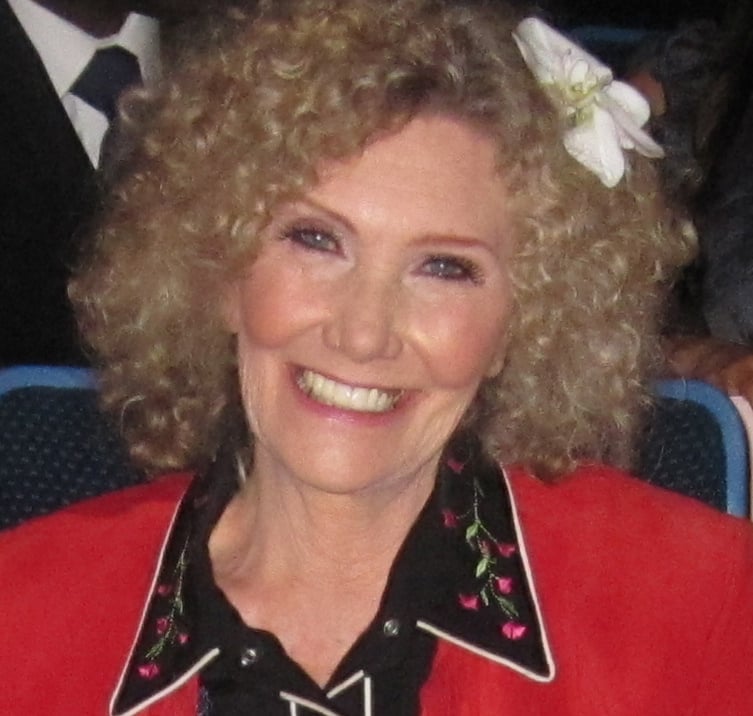
Carole Dean is president and founder of From the Heart Productions; a 501(c)3 non-profit that offers the Roy W. Dean Film Grants and fiscal sponsorship for independent filmmakers.
She is creator and instructor of Learn Producing: The Ultimate Course for Indie Film Production. Essential classes for indie filmmakers on how to produce their films.
She hosts the weekly podcast, The Art of Film Funding, interviewing those involved in all aspects of indie film production. She is also the author of The Art of Film Funding, 2nd Edition: Alternative Financing Concepts. See IMDB for producing credits