Why Your Indie Film Distribution Strategy Must Start Before Your Film Is Finished
by Carole Dean
For many years, independent filmmakers believed that distribution was something that happened after the film was finished. You made the film. You locked picture. You premiered. And then — hopefully — someone opened a door.
But today, we are living in a different moment.

Distribution is no longer a door you wait to walk through. It is a relationship you begin building long before the film is done.
That shift — from waiting to building — is one of the most important changes facing independent filmmakers right now.
Recently, in a conversation on The Art of Film Funding Podcast with Rish Agarwal, co-founder and COO of Kinema, we explored what this change really means. What emerged was not just a discussion about technology, but a deeper reflection on sustainability, ownership, and creative agency.
The Shift Redefining Indie Film Distribution Strategy
Our discussion grew out of a larger question: how can filmmakers thrive in a rapidly changing landscape where traditional systems no longer serve most independent voices?
Rish described Kinema as a platform designed to help filmmakers “add more revenue streams, reach their audience, engage and maintain that audience, and still own their rights and data.” But underneath the technology is a philosophical shift — one that every filmmaker must consider
Distribution Is Something You Do
One of the most important statements Rish made was simple and direct:
“Distribution is not something you get. It’s something that you do.”
For decades, many filmmakers believed that once the film was complete, distribution would follow — ideally through a festival premiere, a sales agent, or a streaming deal. Sometimes it did. Often it didn’t.
Today, the landscape requires something different: active participation.
Active distribution means:
- Identifying your audience early
- Engaging them before the film is finished
- Maintaining that connection beyond a single release
- Thinking of distribution as an ongoing practice, not a final step
This is not about hype. It is about ownership.
When you own your relationship with your audience, you build an asset that lives beyond one project.
The Power of Audience Ownership
One of the challenges of traditional streaming platforms is that filmmakers rarely know who is watching their work.
As Rish explained:
“In the traditional streaming ecosystem, you lose access to your data. You don’t know who’s watching, where they’re watching from — and that becomes an issue.”
Without access to your audience, you start from zero with every film.
But when you collect information — emails, geographic data, engagement patterns — you create continuity. You can carry an audience from one project to the next. You can test ideas. You can learn what resonates.
This is not just marketing. It is sustainability.
Start Building Before You Lock Picture
Another idea that emerged in our conversation is one I have been teaching for years: do not wait until your film is finished to think about distribution.
Rish put it clearly:
“It’s never too early to start building your audience and collecting that information — from fundraising to production.”
The filmmakers who succeed in today’s environment are often entrepreneurial. They understand that finishing the film is only half the journey.
They build:
- Community during crowdfunding
- Momentum during production
- Feedback loops before release
- Demand before the official launch
Some filmmakers even use early virtual screenings to gather feedback and raise finishing funds. These screenings are not signs of weakness. They are signs of engagement.
You do not have to show a rough cut publicly. But you should know who your audience is before you finalize your strategy.
The Myth of Passive Success
There is a persistent myth in our industry — the idea that you will make your film, sell it, and then step aside while the revenue flows in.
Rish addressed this directly:
“Active distribution is really the way forward for a large percentage of films being made today.”
Active does not mean frantic. It means intentional.
It means asking:
- Who is this film for?
- Where do those people gather?
- How can I serve them?
- What partnerships align with this story?
It also means recognizing that distribution may require skills outside your natural strengths.
And here is an important truth:
You do not have to do everything yourself.
If marketing is not your gift, build a team. Work with an impact producer. Collaborate with someone who understands digital outreach. The goal is not to become an expert in everything — the goal is to ensure those competencies exist around your film.
Budgeting for Sustainability
One of the most sobering — and practical — points we discussed was budgeting.
Rish noted:
“Sometimes up to 50% of your budget should be dedicated to distribution and marketing.”
That can feel overwhelming.
But consider the alternative: finishing a film with no funds to share it.
The studios have always understood this principle. Historically, they often matched production budgets with marketing budgets.
Independent filmmakers cannot always double their budgets — but we can plan realistically.
If your goal is for the film to reach people, you must allocate resources for that reach.
This is not a luxury. It is part of the filmmaking process.
Using In-Person and Virtual Together
Another powerful shift is the blending of formats.
Virtual screenings can:
- Create early buzz
- Generate press
- Raise funds
- Provide geographic data
In-person screenings can:
- Deepen connection
- Activate local communities
- Strengthen partnerships
Together, they form what Rish described as a “distribution waterfall” — each stage building momentum for the next.
Rather than dropping your film into the marketplace all at once, you can structure releases to build demand gradually.
That takes planning. But it also creates longevity.
Practical Steps You Can Take Now
If you are in development, production, or post-production, here are actions you can begin immediately:
- Clarify Your Core Audience
Not “everyone.” Be specific. Issue-based films, in particular, often have built-in communities. - Start Collecting Contact Information
From crowdfunding, events, social media — wherever genuine interest appears. - Create Small Feedback Moments
Screen excerpts privately. Listen carefully. Do not defend — observe. - Budget for Distribution
Even if modestly. Line items matter. - Build a Support Team
Identify who complements your strengths. - Shift Your Mindset
Distribution is not an afterthought. It is part of the creative arc.
Alignment Over Hype
None of this requires panic. None of it requires abandoning your artistry.
It requires alignment.
Ask yourself:
- Why am I making this film?
- Who truly needs to see it?
- Am I willing to build the bridge between us?
The landscape has changed. But change is not the enemy of independent filmmakers — it is an invitation.
When you build direct relationships with your audience, you are not dependent on one gatekeeper. You are not starting from zero with every project. You are cultivating a career, not just releasing a film.
That is sustainability.
And sustainability begins with clarity — about your voice, your audience, and the kind of creative life you want to build.
Trust that your story has a home.
Then build the path to it.
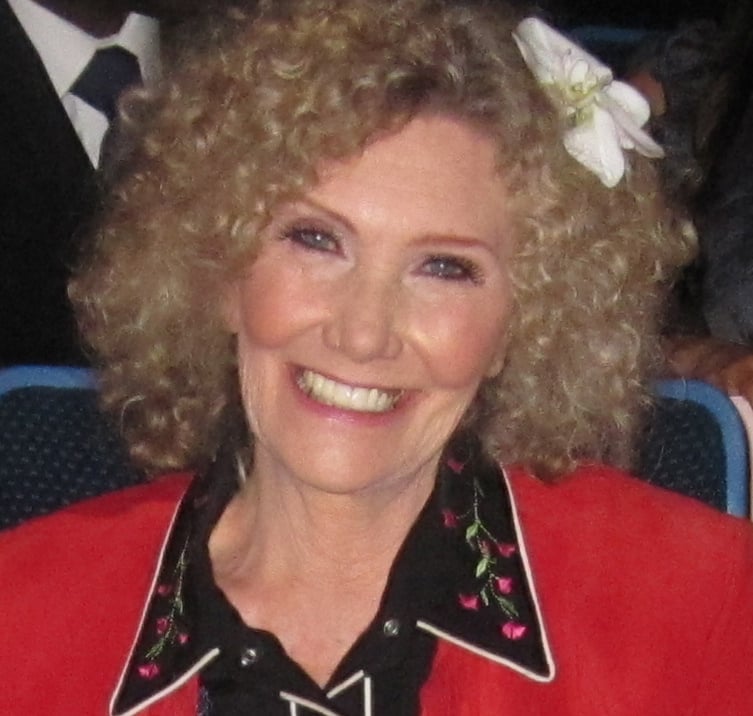
Carole Dean is president and founder of From the Heart Productions; a 501(c)3 non-profit that offers the Roy W. Dean Film Grants and fiscal sponsorship for independent filmmakers.
She is creator and instructor of Learn Producing: The Ultimate Course for Indie Film Production. Essential classes for indie filmmakers on how to produce their films.
She hosts the weekly podcast, The Art of Film Funding, interviewing those involved in all aspects of indie film production. She is also the author of The Art of Film Funding, 2nd Edition: Alternative Financing Concepts. See IMDB for producing credits