How Film Location Incentives in Texas Can Shape Your Budget, Funding Strategy, and Production Success
by Carole Dean
There’s a question I’ve been asking filmmakers for over thirty years: Where are you shooting your film? Most answer with a city. A few answer with a budget. But the smartest ones — the ones who get their films made — answer with a strategy.

That distinction matters more today than it ever has.
Because where you choose to make your film is not just a creative decision. It is a financial one. And if you’re not thinking about location as part of your funding plan, you may be leaving tens of thousands of dollars — sometimes hundreds of thousands — on the table before you’ve written a single call sheet.
In some cases, those decisions can return as much as 45% of your qualified spend. At that level, location stops being a backdrop and becomes one of the most important funding decisions you make.
I was reminded of this vividly during a recent episode of the Art of Film Funding podcast, when my co-host Claire Papin and I sat down with Danielle Guilbot, an Austin-based actress and film tech entrepreneur who has built something genuinely exciting: TexasFilmScene.com, a platform she calls the Texas Movie Operating System.
Danielle is young, sharp, and utterly clear-eyed about what producers actually need. She’s also proof that the next generation of filmmakers isn’t waiting to be discovered — they’re reshaping the industry from the inside out.
What she shared that day deserves to be heard far beyond the podcast.
The Myth That Still Costs Filmmakers Money
Let me say this plainly: you do not have to shoot in Los Angeles or New York to make a serious film.
I know that myth is deeply ingrained. For decades, filmmakers believed the industry only existed in certain zip codes. The studios were there. The agents were there. The “real” crews were there. But the data — and more importantly, the budgets — tell a very different story now.
As Danielle put it: “Producers are voting with their budgets.” And right now, a significant number of them are voting for Texas.
Georgia figured this out years ago. So did New Mexico and Louisiana. Texas, which had a thriving film scene and then lost ground when its incentives dried up, has now come back with one of the boldest commitments in the country: a $1.5 billion fund over the next decade through the SB-22 film incentive program.
That is not a rumor or a projection. That is law. The question is whether you, as an independent filmmaker, know how to access it.
Understanding the Texas Incentive: It’s a Rebate, Not a Tax Credit
This distinction matters enormously for independent producers, so let me be precise.
The Texas Moving Image Industry Incentive Program is a cash rebate — meaning you receive money back on qualified in-state spending, not a deferred credit that may or may not be useful to you. For filmmakers who aren’t attached to a major studio with deep tax liability, this is a critical advantage.
Here is how the base rebate tiers work, as Danielle explained them:
- 5% rebate on qualified Texas spend between $250,000 and $1 million
- 10% between $1 million and $1.5 million
- 25% on $1.5 million and above
And this is where it gets genuinely interesting for indie producers, because those base rates are stackable. You can layer additional incentives on top — up to another 6% — for things like filming in a rural area (defined as a location with fewer than 300,000 residents, not tumbleweeds and oil derricks), hiring Texas veterans, or qualifying as a faith-based production. When you add those together, some productions can see rebates approaching 45% of their in-state spend.
On a $2 million film, Danielle pointed out, that could mean $500,000 back in your pocket. For most independent filmmakers, that is the difference between a film that gets made and one that doesn’t.
To qualify, your production needs at least $250,000 in Texas spend, at least 35% of your paid crew and 35% of your paid cast — including extras — must be Texas residents, and at least 60% of the total production must be completed in Texas. As Danielle noted: “These are some pretty easy bars to pass.”
The Location Advantage Nobody Talks About
When filmmakers think about Texas, they often picture one thing: flat land, cattle, horizon. That is a small and outdated slice of a very large and varied state.
Texas has coastline. It has swamps, caves, deserts, prairies, mountains, borderlands, and some of the most cinematically interesting urban environments in the country. It has wide open space — something increasingly scarce in filming locations that are also affordable. And it has authentic people.
Taylor Sheridan, one of the finest writer-directors working today — and yes, I am a devoted fan since Hell or High Water — has understood this for years. When he cast his Texas stories, he went and found the real people: the ranch hands, the livestock specialists, the men and women who actually know that world. You can see the difference on screen. There is no faking that kind of authenticity. Texas is full of it.
And now there are world-class production facilities growing to match. Danielle mentioned Wildwood Studios in Bastrop — built by Zach Levi and Adam Swerdlow — and Strevista Studios in Austin, an LED volume facility that would hold its own anywhere in the industry. Texas isn’t just offering incentives; it’s building the infrastructure to support full-scale production.
What Producers Actually Lose — and How to Stop It
Here is the number that stopped me when Danielle shared it: producers are leaving an average of $50,000 to $500,000 per production in unclaimed incentives. Not because the money isn’t there. Because the process is fragmented, the information is scattered, and too many filmmakers don’t discover what they qualified for until it’s too late to qualify.
Danielle built TexasFilmScene.com specifically to close that gap. The platform functions as what she calls a public clearinghouse — a single place where producers can find crew directories, location data, and, critically, incentive modeling tools. You can put in your project, your budget, and your planned shooting locations and see what you can realistically expect to receive back. Before you lock your budget and before you commit to a location. Before you leave money on the table because no one told you there was a table.
Her most important piece of advice: model your scenarios early. The time to understand what you qualify for is not after you’ve signed your contracts. It’s while you’re still designing the project. Incentive planning belongs in pre-production, not in post.
Think Like an Entrepreneur — Because You Are One
This brings me to something Danielle said that I want every filmmaker to sit with.
She was nineteen when we spoke and had credits on a Richard Linklater Netflix film and a Disney Plus series. She had every reason to simply keep auditioning. Instead, she spent months talking to producers, identifying a real problem in the industry, and building a technology platform to solve it — not because it was the obvious path, but because she refused to let other people define the limits of her contribution.
“I don’t want to have other people define which projects I’m able to work in,” she said. “I want to provide value to other people outside of my talent as an actor.”
A Harvard study confirmed something I’ve believed for a long time: filmmakers are entrepreneurs. The skills required to develop, fund, produce, and distribute an independent film are the same skills that build successful businesses. Vision, resourcefulness, relationship-building, problem-solving, financial intelligence — you need all of it.
The filmmakers who thrive long-term are the ones who embrace that identity. Tom Malloy, who started as an actor, couldn’t get his script made without producing it himself. So he became a producer. Then a director. Thirty films later, he teaches others what he learned along the way. He kept expanding. That is the entrepreneurial mindset in action.
If you are waiting to be given your opportunity, you may wait a very long time. If you start asking where the real needs are and how your particular skills and perspective can address them, the opportunities tend to find you.
Practical Steps to Take Right Now
If you are in pre-production, or even in development, here is what I would encourage you to do immediately:
- Look at your story and ask: does this have a natural Texas connection? An authentic Texas story shot in Texas with Texas people — that is not just a financial advantage, it is a creative one. The setting will breathe.
- If your story doesn’t require Texas, ask whether it could be adapted to work there. You may be surprised. Texas has the range to stand in for a great many places.
- Visit TexasFilmScene.com and model your incentive scenario. Danielle’s team has built tools specifically designed for producers who need to understand their options clearly and quickly. Use the scenario modeling before you finalize your budget.
- Make sure your production is designed to qualify. Hire Texas residents for at least 35% of your crew and cast. If you’re shooting in a rural area, confirm the population threshold. Keep your compliance documentation organized from day one — losing a rebate because of paperwork errors is a preventable tragedy.
- Connect with the Texas Film Commissions. Danielle is actively partnering with them, and they want filmmakers to come. This is not a bureaucratic obstacle course; it is a system designed to invite you in.
The Bigger Lesson About Where Opportunity Lives
I’ve watched this industry long enough to see the center of gravity shift. It shifted when cable changed television and when streaming changed distribution. It is shifting now as states compete to become the next production hub and as technology makes it possible to tell stories anywhere with the same quality once reserved for major studios.
The filmmakers who thrive in each of these shifts are the ones who pay attention early, position themselves intelligently, and move toward the opportunity rather than waiting for it to come to them.
Texas is not the only place where that opportunity is growing. But right now, with $1.5 billion committed to production incentives, a growing crew base, world-class facilities coming online, and a platform like TexasFilmScene.com designed to help you navigate all of it — Texas is one of the most compelling cases in the country.
Smart filmmakers don’t just chase funding. They position their films where funding can find them.
Where you shoot is a decision. Make it a strategic one.
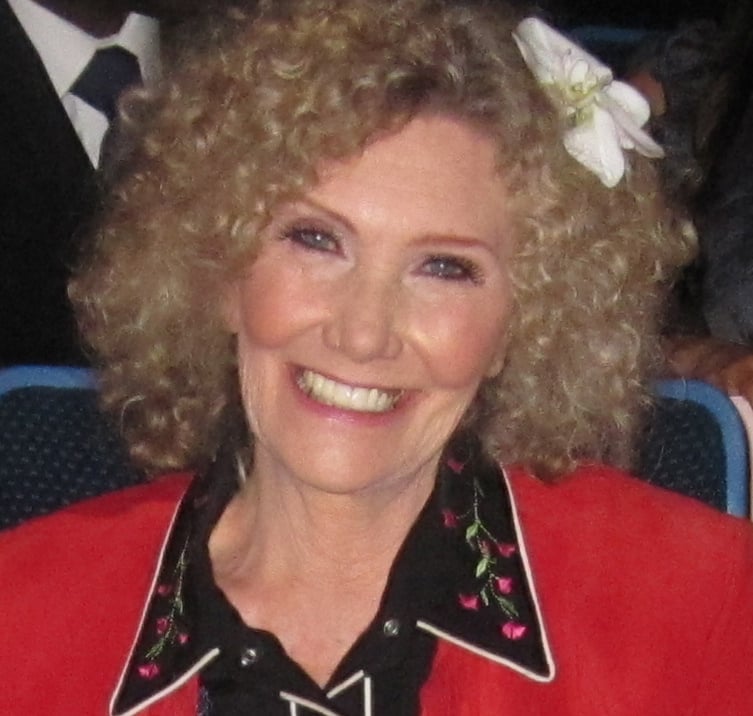
Carole Dean is president and founder of From the Heart Productions; a 501(c)3 non-profit that offers the Roy W. Dean Film Grants and fiscal sponsorship for independent filmmakers.
She is creator and instructor of Learn Producing: The Ultimate Course for Indie Film Production. Essential classes for indie filmmakers on how to produce their films.
She hosts the weekly podcast, The Art of Film Funding, interviewing those involved in all aspects of indie film production. She is also the author of The Art of Film Funding, 2nd Edition: Alternative Financing Concepts. See IMDB for producing credits