How to Thrive as a Screenwriter Today: Strategy, Emotional Truth, and Career Power in a Changing Industry
By Carole Dean
Every once in a while, a conversation stops you in your tracks. You hear something so clear, so incisive, that it cuts through the noise of an ever-changing industry.
That’s what happened when award-winning screenwriter, director, and producer Spade Robinson joined me on The Art of Film Funding Podcast for a deep, generous, and brutally honest conversation about what it takes to succeed as a filmmaker today.

The future of screenwriting and producing is not only about craft—it’s about clarity, business savvy, emotional vulnerability, and knowing exactly what you want your project to do for your career.
As Spade put it:
“A script is its own art form… but it can also be your calling card, your entry into a lab, your chance to get staffed, or the project you produce yourself. The biggest mistake writers make is not knowing what they want their script to do.”
If you’re a filmmaker ready to step into your power—creatively and financially—this is your roadmap.
Know EXACTLY What You Want Your Script to Do
Spade didn’t mince words. The number one mistake she sees screenwriters make isn’t about dialogue, plot, or formatting.
It’s unclear goals.
“If you don’t know what you want the script to accomplish, you can’t reverse-engineer the creative decisions.”
Is your screenplay meant to:
- Get you staffed?
- Help you win contests?
- Be produced by YOU?
- Be sold to a studio?
- Build your press presence?
- Land an agent or fellowship?
Your answer determines everything:
- Budget level
- Genre
- Casting potential
- Production feasibility
- The scope of your story
When you know your destination, you can design the path.
Stop Writing $20 Million Movies as a First-Time Filmmaker
I said to Spade what I’ve told filmmakers for decades:
“Too often first-time filmmakers write a $20 million script. Start where you ARE, not where you dream to be.”
Hollywood has always operated on trust:
- Make a brilliant $20,000 film →
- Get trusted with $200,000 →
- Prove yourself →
- Get funded at $2 million →
- THEN take your big swing.
Spade wholeheartedly agreed.
“Reverse-engineer what you have access to,” she advised. “Your budget level should reflect your real resources—not fantasy.”
Write something you can actually make.
Then build upward.
What Is a “Market-Ready” Screenplay Today?
Every grant cycle, I say the same thing to applicants:
“You have a great idea—but it isn’t developed enough.”
So I asked Spade to explain “development” from the perspective of someone who reads thousands of scripts.
Here’s her brilliant breakdown:
A. Development Means Diving Deep Into Character
“Who is this person really? What do they want? What must they overcome?”
This emotional excavation is the heart of your story.
B. Structure Must Serve Emotion
“Each act must do its job. Every beat should be an emotional bridge to the next.”
Brainstorming is fun—but development is discipline.
C. The Package Matters
A market-ready project includes:
- A strong script
- A realistic budget
- A strategy for attachments
- A pitch that demonstrates your market positioning
Spade reminded us:
“Do NOT go to market expecting the other side to do all the heavy lifting.”
Screenwriting Has Changed. Your Strategy Must Too
The past five years have transformed the career path for writers.
Television is not the safe haven it once was.
Rooms are smaller. Contracts are shorter. Income is unpredictable.
But opportunity has expanded elsewhere:
- Self-production
- Online distribution
- Audience building on social platforms
- YouTube vertical content
- Global markets
Spade noted “Writers now have the power to produce AND distribute their work. That is new. And it is democratic.”
But you must let go of the fantasy that the traditional route is the only route.
Waiting for permission is not a business plan.
Should You Write for Art or Marketplace?
Spade says write for BOTH!
I loved her answer to the age-old dilemma:
“Art and commerce cannot be divorced. The best work rises because it’s both emotionally potent and positioned strategically.”
If you understand:
- Industry economics
- Yourself
- Your goals
- Audience behavior
Then you can design a career rather than chase one.
The Distribution Revolution Is Here (Vertical Is Coming Fast)
Distribution is in upheaval. Audiences are fragmenting. Homes across Asia don’t even have TVs.
One of Spade’s colleagues told her:
“In China, nobody has a television. Everyone watches vertical content on their phones.”
This should make every filmmaker pause.
Are you composing shots that can be re-framed vertically?
Are you thinking globally?
Are you building shorter-form content to grow your audience?
If not—start now.
Because Spade sees the trend clearly:
“Vertical content, niche genres, and global markets are where independent filmmakers must look.”
What Investors and Production Companies REALLY Want
Spade gave one of the most honest, precise answers I’ve ever heard.
They want:
✔ Compelling main characters
Not necessarily likable—but impossible to ignore.
✔ A thrilling, emotionally resonant journey
A ride worth taking.
✔ Endings that feel both inevitable and surprising
✔ Evidence of commercial OR critical viability
✔ A unique writer’s voice
The intangible spark.
“When something is emotionally potent, it is difficult to deny. Even if they don’t fund it, they will send it to someone who might.”
Powerful stories move through the world on their own.
The Hard Truth: 80% of Scripts Are Not Ready
Spade said something every writer needs to hear:
“Eighty percent of what I read is godawful terrible.”
Not because writers lack talent,
but because they skip the hard part:
emotional vulnerability.
She said:
“The more emotionally vulnerable you are on the page, the more elevated your work becomes.”
This is the secret no one teaches.
It’s not plot.
It’s not structure.
It’s not clever dialogue.
It is human truth.
The Path Forward for Emerging Screenwriters
Spade offered a clear two-part blueprint:
Creative Strategy
- Apply to contests and labs
- Use rejections as data
- Track your progress through the rounds
- Refine relentlessly
- Aim for emotional potency
Business Strategy
- Decide what kind of writer you want to be
- Understand how money flows in film
- Build relationships strategically
- Know what you want from each project
- Develop a slate, not a single script
As I often say to filmmakers:
“When you have multiple projects ready, you’re never pitching from desperation—you’re pitching from power.”
Spade affirmed this:
“Once you understand the industry deeply, you can make the right business decisions for each script.”
The Future Belongs to Strategic Storytellers
Spade Robinson is a force—intelligent, emotionally grounded, business-savvy, and deeply invested in helping filmmakers succeed.
Her message is empowering and crystal clear:
Know what you want.
Understand the business.
Develop deeply.
Be emotionally brave.
And build your career strategically.
This is the path forward.
For the filmmakers “From the Heart” serves, her advice is a priceless roadmap for surviving—and thriving—in this new filmmaking era.
If you want to learn more about Spade Robinson, her coaching, her films, and the Atlanta Film Project, visit:
👉 https://www.spadeincmedia.com
👉 https://www.atlantafilmproject.com
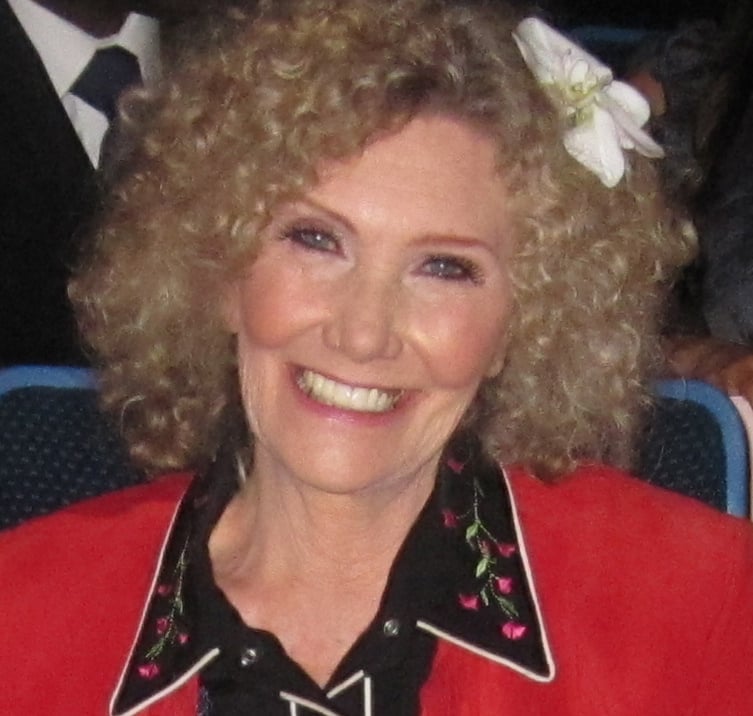
Carole Dean is president and founder of From the Heart Productions; a 501(c)3 non-profit that offers the Roy W. Dean Film Grants and fiscal sponsorship for independent filmmakers.
She is creator and instructor of Learn Producing: The Ultimate Course for Indie Film Production. Essential classes for indie filmmakers on how to produce their films.
She hosts the weekly podcast, The Art of Film Funding, interviewing those involved in all aspects of indie film production. She is also the author of The Art of Film Funding, 2nd Edition: Alternative Financing Concepts. See IMDB for producing credits