
Listening Before the World Listens: How to Strengthen Your Film Before Release
by Carole Dean
You’ve lived with your footage for months (sometimes years). You know every cut. Every breath. Every frame you fought for. And then one day you realize the most dangerous audience for your film… is you.
Not because you lack taste. Because you have memory.

You remember what it took to get a performance. You remember the location falling apart. You remember why a scene was “impossible” to shorten. And those memories quietly protect choices that an audience doesn’t experience the same way.
That’s why test screenings matter. They don’t replace your vision. They protect it—by revealing where the film you made doesn’t yet match the film you intended.
What a Test Screening Really Does (and What It Doesn’t)
Test screening has a bad reputation in creative circles—like it’s code for “make it bland.” Kevin Goetz (who has run thousands of title tests) puts it more plainly: film is made by artists, but it’s ultimately “made for an audience,” and the purpose of testing is to “dig deeply… and find out what’s working, and what’s not working” so you can return to the edit room with clarity.
A good test screening does not:
- Vote on your film like a reality show
- Turn your story into committee writing
- Tell you what to do
A good test screening does:
- Identify confusion you’re blind to
- Show you where attention drops (even if people are polite)
- Reveal which characters feel trustworthy, or not
- Confirm whether the ending lands the way you think it lands
- Give you language for how audiences describe your film—which becomes marketing gold later
And if you’re wondering whether “data-driven” thinking belongs in indie film: Stephen Follows has built a career showing filmmakers how audience responses (at scale) reveal patterns—what people engage with, where films lose momentum, and what separates projects that connect from projects that stall.
His work draws from enormous pools of reviews, ratings, and comments precisely because audience reaction is measurable and useful—if you ask the right questions.
Why Indie Filmmakers Need Test Screenings Even More Than Studios
Studios test because they have millions at stake. Indie filmmakers should test because they have one shot to make festivals, distributors, and audiences lean in.
Here’s what’s uniquely true for indies:
1) You don’t have money for “invisible mistakes”
A confusing first act. A lead character the audience doesn’t bond with. A genre promise that isn’t clear until too late. These issues don’t always show up in your own viewing—especially when you already know the story.
2) Your film’s clarity is part of its fundability
Whether you’re courting festivals, sales partners, donors, or impact allies, the same question is lurking: Does it play? Testing helps you answer that with evidence, not hope.
3) You need word-of-mouth that starts early
Even Goetz emphasizes that “word of mouth by someone you trust” remains a major driver of viewing decisions. A smart test screening can become the start of your ambassador circle—if you set it up correctly.
The Benefits You Can Actually Measure
Think of a test screening as a flashlight. It shows you what’s already there.
Here are the most common “wins” filmmakers report after a strong test:
Narrative clarity
- Where did people get lost?
- What did they think the film was “about”?
- Which plot points felt unmotivated?
Emotional pacing
- Where did attention drift?
- What moments got the biggest laughs, tension, or silence?
- Did the ending deliver the emotion you intended?
Character connection
- Who did viewers root for—and why?
- Did anyone feel inconsistent or unbelievable?
- Were motivations clear?
Practical edit direction
You walk away with a prioritized list:
- Must-fix confusion
- Should-fix pacing
- Nice-to-fix preferences
That hierarchy alone can save months.
When to Test: Timing Matters
There are different “tests” for different stages:
Early cut (internal clarity check)
Use this with trusted story people and craft peers. It’s about structure and intention.
Near picture lock (true audience test)
This is the one most filmmakers mean by “test screening.” Guerrilla Rep Media recommends waiting until the film is close to done because screenings can be labor-intensive and showing too early can create the wrong impression.
If you can only do one serious test screening, do it near picture lock, when you’re still able to make changes.
How to Set Up a Test Screening That Gives You Usable Feedback
Step 1: Decide what you’re testing for
Pick 3–5 priorities, such as:
- “Is the protagonist’s motivation clear by minute 15?”
- “Do viewers understand the stakes?”
- “Does the ending feel earned?”
- “Is the genre promise clear early?”
If you don’t define the purpose, you’ll drown in opinions.
Step 2: Recruit the right audience (not just your friends)
Your cast and crew love you. That’s not data.
A practical guideline: invite people who resemble your intended audience, not only filmmakers. Guerrilla Rep specifically notes that filmmakers can have their own biases, and you ultimately want feedback from people who would actually watch your movie.
Aim for a mix:
- Target audience members (the core)
- A few “adjacent” viewers (close, but not exact)
- A small handful of craft-savvy viewers (to flag technical distractions)
Step 3: Protect the experience
If you’re screening online, security matters—not just for piracy, but so you can share without fear.
Platforms built for secure screenings often include DRM and watermarking. Eventive highlights advanced security and forensic watermarking for online screenings and events. Kinema also emphasizes DRM, session locking, and watermarking options.
Step 4: Collect feedback immediately
People forget fast. Capture reactions while the movie is still in their body.
Guerrilla Rep shares a very practical lesson: paper comment cards collected on-site can produce far higher completion rates than emailed surveys later.
If you’re virtual, keep the survey link on screen and follow with a short deadline (“Please complete in the next 20 minutes”).
Step 5: Use a two-layer system: survey + conversation
Goetz describes a process that pairs quantitative questions (surveys) with deeper qualitative discussion (a focus group) to uncover what’s underneath the scores.
You don’t need a studio budget to do this. You need structure:
- Survey for patterns
- Moderated discussion for meaning
What to Ask: A Simple Question Set That Works
Keep it short. Make it answerable. Avoid “How did you like it?” (That invites politeness.)
Use questions like:
Comprehension
- What do you think the film is about (in one sentence)?
- At what moment did you understand the central conflict?
- Was anything confusing? If yes, when?
Engagement
- When did your attention drift (if it did)?
- What scene do you remember most strongly—and why?
Character
- Who did you connect with most?
- Did anyone’s choices feel unbelievable?
Tone & genre
- What genre did you think this was in the first 10 minutes?
- Did the tone stay consistent?
Ending
- Did the ending feel earned?
- What emotion did you leave with?
And include one question that helps marketing later:
- “If you recommended this film to a friend, what would you say it’s like?”
That sentence is often your best trailer copy.
Venues and Platforms Indie Filmmakers Can Use
In-person options (often easiest for honest reaction)
- A small local theater on an off-night
- A community arts center
- A university screening room
- A trusted film society or nonprofit partner
In-person gives you something no survey can fully capture: body language in the room.
Online screening platforms (great for reach and targeting)
If your audience is geographically spread—or you need multiple “regions” or communities—online testing can be extremely effective. Some services explicitly offer secure online test screening and audience research for filmmakers.
For indie-friendly event screenings and audience-building:
- Eventive (virtual cinema + events, security, analytics)
- Kinema (ticketed or hosted screenings, DRM/watermarking, geoblocking)
If you want a more research-oriented virtual approach, Screen Engine/ASI’s Virtuworks is an example of a platform built around secure viewing plus options like moment-to-moment feedback and surveys/discussion formats.
The Most Important Rule: Don’t Confuse “Notes” With “Truth”
You will get feedback you disagree with. Good. That’s normal.
Here’s the way to handle it like a pro:
- If one person says it: it’s a preference
- If many people say it: it’s a pattern
- If many people feel it but describe it differently: it’s your real problem
Your job is not to obey notes. Your job is to diagnose what the note is pointing to.
Sometimes the audience is wrong about the solution…but right about the feeling.
A Quick Word for the Artist Who Fears Testing
Some filmmakers proudly reject test screenings. Quentin Tarantino, for example, has criticized questionnaire-style testing as a way of “getting their reactions.”
And here’s my take: you don’t have to copy anyone’s process.
But if you skip testing entirely, you’re making a different kind of choice: you’re deciding that opening weekend (or your first festival screening) will be your feedback session—when it’s too late to adjust.
A test screening is simply you giving yourself one last chance to shape the experience you want the audience to have.
That’s not selling out.
That’s stewardship.
Your Practical Next Step
If you’re in post right now, do this:
- Schedule one test screening near picture lock
- Recruit 25–60 people who resemble your real audience
- Use a short survey + a 20-minute moderated discussion
- Look for patterns, not opinions
- Make only the changes that strengthen clarity, emotion, and momentum
Because the goal isn’t perfection.
The goal is a film that lands.
Ready to Strengthen Your Film Before Release?
From the Heart Productions supports independent filmmakers through fiscal sponsorship, education, and professional guidance. Learn how to prepare your film for its strongest possible premiere.
Frequently Asked Questions About Test Screening for Independent Filmmakers
When should independent filmmakers test screen their film?
Near picture lock, when the structure is complete but changes are still possible.
How many people are needed for a film test screening?
Ideally 25–60 viewers. Patterns begin to emerge with at least 15–20.
Should you test screen a film before festivals?
Yes. A test screening helps identify clarity and pacing issues before premiere exposure.
Are online film test screenings effective?
Yes, when using secure platforms and structured feedback tools.
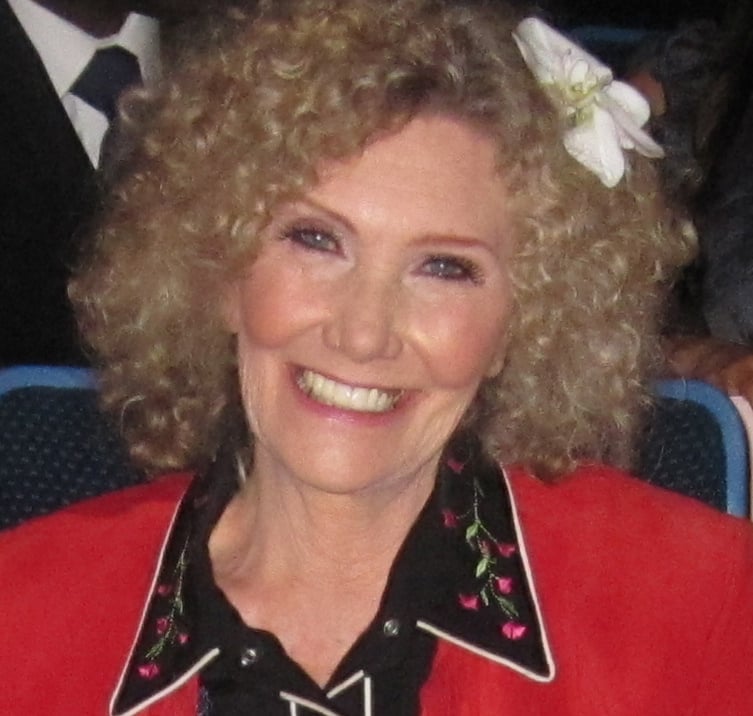
Carole Dean is president and founder of From the Heart Productions; a 501(c)3 non-profit that offers the Roy W. Dean Film Grants and fiscal sponsorship for independent filmmakers.
She is creator and instructor of Learn Producing: The Ultimate Course for Indie Film Production. Essential classes for indie filmmakers on how to produce their films.
She hosts the weekly podcast, The Art of Film Funding, interviewing those involved in all aspects of indie film production. She is also the author of The Art of Film Funding, 2nd Edition: Alternative Financing Concepts. See IMDB for producing credits