
by Carole Dean
Sometimes a film begins with a screenplay.
And sometimes it begins with a question so personal and so painful that the filmmaker must follow it – without knowing where it will lead.

That is what happened to filmmaker and health advocate Nivi Jaswal-Wirtjes, director and executive producer of the award-winning documentary Third Degree Burnout: A Survivor’s Guide.
Nivi’s journey is important for independent filmmakers because it demonstrates how a personal experience can grow into something much larger: a research project, a documentary, an educational resource, an impact campaign, and a community of partners working toward shared change.
Her story also reminds us of something every independent filmmaker needs to understand:
Finishing a film is not the end of the journey. It is the beginning of building the ecosystem that will carry the film into the world.
When the Question Will Not Let You Go
Nivi did not describe the beginning of her film as a sudden moment of inspiration. Instead, she called it “a series of wake-up calls that finally became impossible to ignore.”
For nearly two decades, she had built a successful international career in global marketing. She had lived and worked in seven countries and held leadership positions with major brands.
From the outside, she appeared to be thriving.
Internally, she was exhausted, disconnected, and experiencing a growing number of health problems.
Then the pandemic brought a devastating personal loss. Both of her parents contracted COVID-19. They lived in the same home, ate the same food, and became ill at approximately the same time. Her mother survived. Her father died within four days.
Nivi was left with a question she could not release:
“How could two people in the same household experience such different outcomes?”
She was not searching for someone to blame. She was searching for understanding.
That one question led her into conversations with physicians, psychologists, nutrition researchers, public health experts, lifestyle medicine practitioners, climate scientists, and resilience specialists. The more she learned, the more she saw connections between subjects that are often treated separately: physical health, emotional health, food, stress, relationships, the workplace, the environment, and the systems surrounding us.
This is where filmmakers should pay attention.
A meaningful film does not always begin with an answer. It often begins with a question the filmmaker is willing to pursue honestly.
You do not have to know the entire shape of your film at the beginning.
But you do need enough curiosity, courage, and commitment to follow the question.
Personal Truth Can Open the Door to a Universal Story
Nivi’s film began with her own experience, but she did not allow it to remain only a personal memoir.
She expanded the inquiry.
Her nonprofit partnered with Ipsos Global Public Affairs on the GAIA Study, which examined the experiences of more than 14,000 Americans during the pandemic. The research looked beyond whether people felt stressed. It explored how behaviors, lifestyles, and mindsets related to well-being and resilience, and infectious disease recovery.
What Nivi discovered was not a collection of unrelated problems.
She saw an interconnected system.
As she explained:
“We often divide health into separate boxes: mental health, physical health, environmental health. But real life doesn’t work that way.”
This is a valuable storytelling lesson.
Your personal experience may be the doorway into the film, but the film becomes more powerful when you investigate the larger patterns around that experience.
Ask yourself:
What does my personal story reveal about the world?
Who else is affected?
What systems are involved?
What research, history, or expert knowledge can deepen the story?
Where does the individual experience connect with a larger social need?
The most effective documentaries often move between the intimate and the universal. They help us care about one person while also helping us understand a broader condition.
Do Not Lecture an Overwhelmed Audience
Third Degree Burnout addresses serious subjects: chronic stress, illness, food systems, mental well-being, social inequity, and planetary health.
Nivi understood that presenting this material as a long lecture could cause viewers to withdraw.
“Burnout is heavy enough,” she said. “When people are exhausted, anxious, and overwhelmed, the last thing they need is another lecture.”
Her creative team incorporated animation, motion graphics, storytelling, and 15 humorous sketches throughout the film.
The humor was not included to make light of the subject. It was used to create breathing room.
It allowed viewers to recognize themselves without immediately feeling judged.
It gave them time to absorb complicated information before moving into the next important idea.
This is excellent guidance for filmmakers working with difficult material.
The audience has emotional limits.
If every moment is painful, alarming, or information-heavy, viewers may stop listening. Contrast helps people remain present.
Humor, beauty, tenderness, silence, music, or a human moment can give an audience the space it needs to continue.
The goal is not simply to deliver information.
The goal is to create an experience the audience will remember and discuss.
Let Research and Intuition Work Together
One of the most important ideas Nivi shared was that data and intuition do not have to compete.
Through From the Heart Productions, she learned about Largo.ai and eventually conducted more than 15 simulated audience focus groups across different demographic profiles.
She used the analysis to explore questions such as:
Where did the audience’s emotional intensity rise or fall?
Which subjects generated curiosity or empathy?
Which relationships resonated?
Where did the audience experience surprise, fear, discomfort, or relief?
The results supported her belief that the combination of personal storytelling, science, animation, and humor was helping people stay engaged.
But Nivi did not treat artificial intelligence as a replacement for creative instinct.
Her conclusion was more balanced:
“Data and intuition work best together.”
Research may reveal patterns. Audience analysis may identify moments that are unclear, emotionally powerful, or unexpectedly effective.
But an algorithm does not carry the filmmaker’s purpose.
It does not possess the filmmaker’s lived experience, moral judgment, or personal connection to the subject.
Nivi described Largo as “a tool for listening to the audience.”
That is the healthiest way for filmmakers to approach new technology.
Use data to ask better questions.
Use audience feedback to improve communication.
Use technology to test assumptions.
But do not abandon your humanity or your inner knowing.
People do not connect with a film merely because an algorithm predicts that they will. They connect because they recognize some part of themselves – their fears, questions, struggles, and hopes – on the screen.
Purpose Can Sustain You, but Partnership Makes the Work Sustainable
Nivi self-funded much of the film (and the primary research study woven into this project) from her own savings.
Many independent filmmakers understand that temptation. You believe deeply in the project. You do not want to wait. You convince yourself that carrying the financial burden alone may be the fastest way forward.
But self-funding can become emotionally and financially unsustainable.
Nivi was honest about the experience.
She described independent filmmaking as lonely, especially when one person becomes the researcher, director, fundraiser, marketer, and social media manager.
What kept her moving forward was remembering who the film could serve: healthcare professionals experiencing burnout, students facing anxiety, families navigating chronic illness, and people who had never been taught how lifestyle choices might affect their well-being.
Purpose gave her endurance.
But she also learned an essential lesson:
“Purpose can sustain you, but purpose doesn’t eliminate the need for partnership.”
This may be one of the most important lessons for independent filmmakers.
You are not supposed to carry the entire film alone.
A sustainable film requires an ecosystem that may include:
- Funders and executive producers
- Educational institutions
- Healthcare or community organizations
- Foundations and nonprofit partners
- Impact producers
- Distributors
- Researchers and subject-matter experts
- Audience ambassadors
- Mentors and advisors
The right partnership does more than provide money.
It expands credibility, access, reach, knowledge, and long-term impact.
Awards Open Doors, but Audience Response Reveals the Truth
Third Degree Burnout has received numerous awards and recognitions. These honors helped establish trust when Nivi approached institutions, funders, and screening partners.
Independent validation matters.
It reassures a potential partner that the work has been reviewed and recognized by others.
But Nivi said the most meaningful evidence often came after the screening.
Audience members stayed to share their own experiences.
Post-screening conversations lasted 45 minutes or longer. At one university screening, the conversation continued in a nearby coffee shop after the venue time had expired.
Students said they felt understood.
Healthcare professionals said they had discovered a resource they could share.
Audience members said they had never realized how connected these different issues were.
Nivi summarized the distinction beautifully:
“The awards may open the door, but really it’s the audience response that tells you whether your work is truly making a difference.”
Filmmakers should document these responses.
Record attendance.
Collect audience comments.
Request testimonials.
Track the length and quality of post-screening discussions.
Note which organizations request additional screenings.
Measure whether one event leads to another.
These are not merely encouraging memories. They are evidence of audience demand and impact.
They can strengthen funding proposals, distribution conversations, partnership outreach, and future campaign planning.
Think Beyond Single Screening
Nivi does not see the completed documentary as the final product.
She sees it as an invitation.
Her team explores an impact strategy involving universities, healthcare organizations, corporate audiences, conferences, community partners, and potential theatrical events.
She is also considering shorter educational versions and a possible multi-part series.
This is smart, because different audiences have different needs.
A university classroom may need a 30-minute version followed by discussion.
A healthcare conference may want selected scenes combined with a panel.
A corporation may need a facilitated program focused on workplace culture, prevention, leadership, and employee well-being.
A community organization may want the full film followed by local resources and action steps.
The core film remains important, but its reach may increase when the filmmaker creates additional pathways into the material.
Nivi explained:
“Behavior change doesn’t happen because someone watches a film once.”
Stories create change when their ideas are reinforced through discussion, trusted messengers, educational materials, community support, and repeated opportunities for engagement.
For filmmakers, this means distribution should not be treated as one sale or one premiere.
Distribution can become a long-term architecture of relationships.
Fundraising Is an Invitation to Shared Purpose
Nivi offered especially useful guidance for filmmakers raising money for impact and distribution.
First, do not wait until the film is completed to begin building relationships.
Some of her most important partnerships began through conversations, thoughtful questions, and a genuine effort to understand what other organizations were trying to accomplish.
Second, stop thinking of fundraising only as asking for money.
Nivi said:
“Think of it as inviting people to participate in solving a problem they already care about.”
That shift changes the entire conversation.
Instead of asking, “How can I convince this person to support my film?” ask:
What does this foundation care about?
What problem is this organization working to solve?
How does my film advance its mission?
What audience do we both want to reach?
What measurable outcome might we create together?
The strongest partnerships come from alignment.
You should not have to pressure someone into caring about the issue.
Your job is to find people who already care and show them how the film can help them advance a shared purpose.
As Nivi reminded us:
“People don’t just invest in films. They invest in people, they invest in purpose, and they invest in relationships.”
Practical Steps Filmmakers Can Take Now
Nivi’s experience offers several actions filmmakers can begin immediately.
Clarify the central question driving your film. Write it in one sentence.
Identify the communities most affected by the subject.
Begin building partnerships before the film is finished.
Listen to potential audiences instead of assuming you understand them.
Create emotional variety within serious material.
Use research and technology to strengthen – not replace – your intuition.
Document audience engagement at every screening.
Consider multiple versions or formats for different audiences.
Frame fundraising as participation in a shared solution.
Protect your financial sustainability by refusing to carry every responsibility alone.
Most importantly, continue asking whether your decisions are aligned with the deeper reason you began.
Your Film Can Become the Beginning of a Larger Conversation
Nivi’s journey began with exhaustion, illness, grief, and a question she could not answer.
She followed that question into research.
The research became a film.
The film created screenings.
The screenings created conversations.
The conversations created partnerships.
And those partnerships are now becoming the foundation of a broader impact campaign.
This is how a film grows beyond the screen.
Independent filmmakers often begin with limited resources, but you possess something enormously valuable: the ability to recognize a story that needs to be told.
Listen to that inner guidance.
Then support it with preparation, research, honest audience engagement, practical partnerships, and a sustainable strategy.
You do not have to know every step at the beginning.
You must make the next aligned choice.
One question can become a film.
One film can become a conversation.
One conversation can become a community.
And a community moving with shared purpose can create meaningful and lasting change.
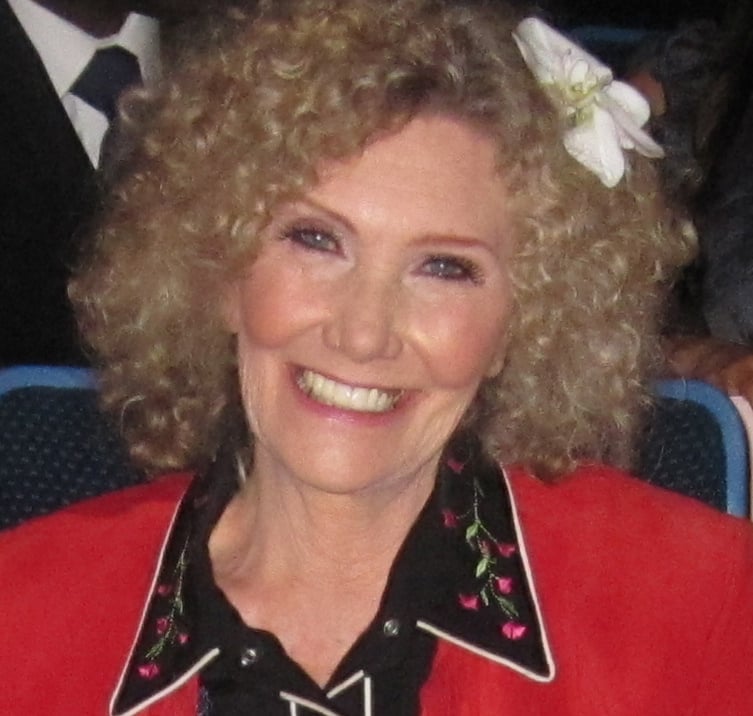
Carole Dean is president and founder of From the Heart Productions; a 501(c)3 non-profit that offers the Roy W. Dean Film Grants and fiscal sponsorship for independent filmmakers.
She is creator and instructor of Learn Producing: The Ultimate Course for Indie Film Production and Filmmaker Acountability Circle. Available on From the Heart’s new Thrive Education Platform for indie filmmakers.
She hosts the weekly podcast, The Art of Film Funding, interviewing those involved in all aspects of indie film production. She is also the author of The Art of Film Funding, 2nd Edition: Alternative Financing Concepts. See IMDB for producing credits