
Film attorney Robert Seigel explains the essential legal issues for documentary filmmakers—from privacy and defamation to research and releases.
by Carole Dean
A film about a real person may begin with admiration, outrage, curiosity, or the belief that an important story has been overlooked.
Then the practical questions arrive.
Is an interview enough, or is a signed agreement needed?
What happens when sources conflict—or when a truthful detail is also deeply private?
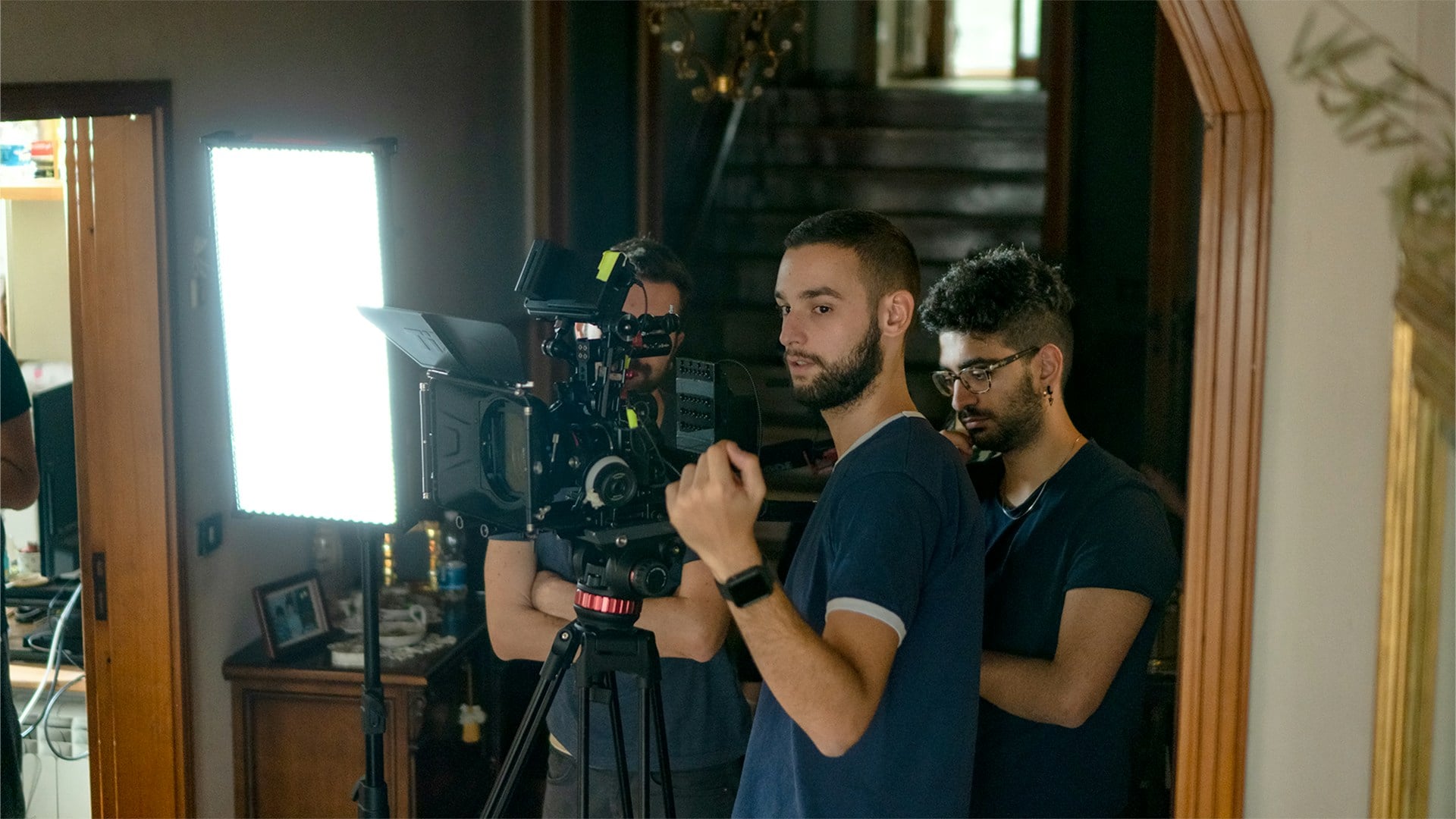
These legal issues for documentary filmmakers should be considered while the story is taking shape. Addressing them early can guide research, access, writing, production, marketing, and distribution.
Discovering them after the edit is nearly complete can threaten a film’s future.
In a recent From the Heart Productions Learn Producing Class, entertainment attorney Robert Seigel explained how privacy, publicity rights, defamation, research, agreements, and releases work together.
Robert has worked in film for more than 30 years and advises filmmakers from their first idea through distribution. I have worked with him as From the Heart’s attorney and as my own, and I value his practical approach.
This article is for educational purposes. Laws differ by state and by project, so filmmakers should consult a qualified attorney about their own films.
Privacy Is Not the Same as Defamation
Robert defined privacy as the right to live without unwarranted and unwanted publicity—more simply, “the right to be left alone.”
Privacy and defamation are related, but they protect different interests. Defamation concerns harm to someone’s reputation. An invasion-of-privacy claim does not always require reputational harm.
Robert emphasized, “Truth, however, is not a defense” to an invasion-of-privacy claim. A fact may be accurate and still expose a private matter the public has no legitimate reason to know.
Information in the public record generally cannot support this type of privacy claim. Express or implied consent may also provide a defense. Someone who voluntarily shares private facts may have less ability to claim they remained private.
Before including sensitive information, ask: How was it obtained? Is it genuinely newsworthy? What consent exists? Why does the audience need it?
Four Ways a Film Can Invade Someone’s Privacy
Robert described four common forms of invasion of privacy.
Intrusion Into Private Affairs
Intrusion can include wiretapping, unreasonable surveillance, or another highly offensive way of entering someone’s private life. Robert contrasted a voyeur looking through a bedroom window with a salesperson knocking during dinner. One is a serious intrusion; the other is merely irritating.
Before recording, consider where the person is, whether privacy is reasonably expected, what permission exists, and how the footage is being obtained.
Public Disclosure of Private Facts
A claim may arise when someone publicizes a private matter that would be highly offensive to a reasonable person and is not a legitimate public concern.
A sensitive fact should be included because it helps the audience understand the story—not simply because it is dramatic.
Misappropriation of a Name or Likeness
Misappropriation involves using someone’s identity without authorization. In privacy law, the harm may be emotional distress or embarrassment. This overlaps with the right of publicity, which protects the commercial value of a person’s identity.
False Light
False light presents someone in a highly offensive and misleading way, even without the reputational damage required for defamation. Robert’s example was placing a prominent Republican’s name on a list of Democratic contributors. The person’s overall reputation may not be damaged, but the representation is false.
Filmmakers should examine how editing, chronology, music, narration, reaction shots, and missing context affect meaning. Does the finished sequence suggest more than the evidence supports?
Do Not Present Invention as Fact
Robert discussed Spahn v. Julian Messner, Inc., involving an unauthorized biography of baseball player Warren Spahn. The author dramatized incidents, invented conversations, changed chronology, attributed thoughts and feelings to Spahn, and fictionalized events.
The author had not interviewed Spahn, his family, or baseball players who knew him. His research relied heavily on newspaper and magazine clippings that were rarely confirmed.
The problem was not simply that the biography was unflattering. It was what Robert called “fictitious report masquerading as facts.”
This boundary matters in documentaries and docudramas. If a scene combines events, reconstructs dialogue, changes chronology, or imagines someone’s thoughts, decide how it will be supported, disclosed, or clearly framed as a re-creation.
Publicity Rights Protect Commercial Value
The right of publicity allows people to control certain commercial uses of their names and likenesses. Robert’s example was simple: A company cannot place someone’s face on a jar of pickles without permission.
Films, books, plays, and newspapers may be protected expression under the First Amendment. A newspaper generally does not need permission to publish a newsworthy image. By contrast, putting Elvis Presley’s likeness on an ashtray is commercial exploitation rather than reporting or commentary.
This distinction becomes important when a film expands into advertising or merchandise. Protection for depicting a person in a film may not extend to every related product.
Robert also discussed Hicks v. Casablanca Records, involving a fictionalized film about mystery writer Agatha Christie’s 11-day disappearance. Her estate sued over the use of her identity, but the court found that the production company’s First Amendment rights outweighed the estate’s publicity claim.
A subject or estate cannot always stop an expressive work. Still, First Amendment protection is not permission to become careless.
What Happens to These Rights After Death?
Robert explained that personal privacy rights generally end at death in many states. Publicity rights are more complicated because some states allow them to pass to a person’s heirs.
He explained that New York provides 40 years of protection for certain commercial uses of the name, voice, signature, photograph, or likeness of a deceased personality who was domiciled there. California provides certain protections for up to 70 years, with exceptions for expressive works, news, and public affairs.
Robert also discussed New York’s treatment of digital replicas. A newly created, realistic computer-generated performance may raise legal concerns if viewers are likely to believe the deceased performer authorized it. Under the provision Robert described, a conspicuous disclaimer in the credits and advertising could protect the user. He cited statutory damages of $2,000.
The law included exemptions for documentaries, docudramas, historical and biographical works, parody, satire, commentary, news, public affairs, sports, and political campaigns.
As filmmakers use AI and digital-performance tools, they should not assume a deceased person’s identity is free to use. Domicile, the planned use, state law, and the possibility of misleading an audience all matter.
Defamation Depends on Reputation—and Proof
Defamation is a communication that harms someone’s reputation. It may lower that person in the community’s opinion, expose the person to ridicule or contempt, or discourage others from associating or doing business with them. The damage can be personal or financial.
Defamation laws recognize protections including truth, opinion, fair report, and fair comment.
Public officials and public figures generally face a higher burden. They must prove “actual malice,” meaning the defendant knew a statement was false or recklessly disregarded whether it was true. Simple carelessness is not enough.
For filmmakers, Robert called truth “the most important privilege.” But he added an essential warning: “While truth is an absolute defense, the burden of proving the truth may sometimes fall on you.”
If a film makes a damaging statement, Robert said, “Be prepared to prove it is true.” A strong interview is not always corroboration, and a source’s confidence does not establish reliability.
Careful Research Is Part of Protecting the Film
Robert recommended confirming important information through multiple reliable sources. Filmmakers should keep careful notes and annotate scripts, transcripts, and research materials. If credible sources conflict, the film should report that conflict rather than hide it.
An annotated script connects every factual claim, quotation, image, clip, and allegation to its source. It also helps attorneys, insurers, distributors, broadcasters, and platforms understand how the film supports what it says.
His clearest advice was also his shortest: “Rely only on reliable sources.”
Use the Agreement That Fits the Relationship
A life-rights agreement, documentary subject agreement, appearance-and-access agreement, and talent release do not necessarily provide the same rights.
A life-rights agreement may provide interviews, documents, access, cooperation, a promise not to sue, and permission to fictionalize. A documentary subject agreement may cover the right to record and include the subject, use photographs or memorabilia, receive cooperation, and obtain help securing other permissions.
A talent or interview release should clarify how the person’s appearance may be used and whether compensation will be paid. Robert noted that documentary subjects are not usually paid. He also cautioned against giving subjects approval rights they can withhold after the filmmaker has invested time and money.
Agreements should protect not only the producer but also future licensees, successors, distributors, and others who may exhibit or acquire the film.
Before choosing an agreement, ask what the production needs from the person: an appearance, access, materials, cooperation, help obtaining permissions, the ability to dramatize, or a combination of these.
Legal-Readiness Checklist
Before locking a film about real people:
- Identify the source for every factual claim, quotation, image, and clip.
- Corroborate serious allegations and preserve conflicting accounts.
- List all re-creations, reconstructed dialogue, altered timelines, and attributed thoughts.
- Secure the appropriate subject, access, appearance, interview, location, and talent agreements.
- Obtain written permission for third-party photographs, clips, and other materials.
- Review every use of a real person’s name or likeness in the film, advertising, merchandise, or a digital replica.
- Bring unresolved questions to qualified legal counsel before completion.
About Robert Seigel and How to Contact Him
Robert Seigel has more than 30 years of experience counseling and representing directors, producers, production companies, writers, distributors, and foreign sales agents. His work covers the development, financing, production, marketing, distribution, and licensing of fiction and nonfiction projects.
He also represents performing artists, music recording and publishing companies, talent management companies, authors, playwrights, and digital-media content creators and providers.
To learn more about Robert’s services and how to contact him, click here.
Responsible Choices Keep a Film Moving
Legal planning does not have to interrupt a film’s creative energy. Clear rights, reliable research, defined relationships, and supportable claims give a filmmaker more confidence to move forward.
Self-trust helps us recognize the stories we are meant to tell. Responsibility helps us tell them with care. When purpose, evidence, and deliberate choices stay aligned, a film has a stronger path toward completion and the audience it deserves.

Carole Dean is president and founder of From the Heart Productions; a 501(c)3 non-profit that offers the Roy W. Dean Film Grants and fiscal sponsorship for independent filmmakers.
She is creator and instructor of Learn Producing: The Ultimate Course for Indie Film Production and Filmmaker Acountability Circle. Available on From the Heart’s new Thrive Education Platform for indie filmmakers.
She hosts the weekly podcast, The Art of Film Funding, interviewing those involved in all aspects of indie film production. She is also the author of The Art of Film Funding, 2nd Edition: Alternative Financing Concepts. See IMDB for producing credits