
How to connect with your film’s purpose, prepare a clear funding request, and turn intention into action.
by Carole Dean
One of the hardest parts of funding a film is asking for support before you know who will say yes.
You care about your story. You can imagine how it might move people or help them understand something differently. But when it’s time to approach a potential donor, you may begin to question the very thing that brought you this far: your belief that this film is worth making.

Why would someone give me money? What if they say no? What if I cannot get this film made?
The distance between believing in your story and asking someone to support it can feel surprisingly large. Developing film fundraising confidence means learning how to cross that distance with a clear purpose, credible preparation, and a willingness to act before you know the outcome.
In a presentation for filmmakers at From the Heart Productions, I explored this connection through ideas inspired by Gregg Braden’s book, The Divine Matrix: Bridging Time, Space, Miracles, and Belief. Braden’s reflections on connection, emotion, and possibility offer a starting point for examining how we approach our work.
For filmmakers, the practical value lies in what we do with those reflections: recognize a limiting assumption, understand the value of a story, prepare a funding conversation, and take a specific step toward support.
Use Possibility to Widen Your Search for Support
Braden describes the Divine Matrix as an underlying field connecting everything in existence. Drawing on spiritual traditions and his interpretations of quantum physics, he invites us to consider how thoughts, feelings, intentions, and relationships participate in our experience of the world.
I find that perspective fascinating, while recognizing the distinction between spiritual interpretation and scientific evidence. Quantum physics does not establish that our thoughts alone can cause a grant committee to award us money. A visualization cannot guarantee a donation.
What this perspective offers me is an invitation to look beyond the limitations I initially see.
Every film begins as a possibility. Before there is a screenplay, a camera, or a distribution agreement, someone imagines a story. Then the filmmaker researches, meets people, finds collaborators, and learns what the production requires. Someone contributes money, equipment, expertise, or time. Through those decisions and relationships, an idea gradually becomes a film.
You participate in that transformation. When funding feels out of reach, remember how much of the process depends on discovering people and resources you have not yet encountered.
Leave room in your thinking for those possibilities, then investigate them.
Build Film Fundraising Confidence by Examining Your Assumptions
Consider two filmmakers with excellent documentary projects. Each needs $50,000 to complete production.
The first believes that nobody wants to fund independent films and that people with money will never take the project seriously. That filmmaker may postpone calls, delay grant applications, and avoid asking colleagues for introductions. A rejection may feel like confirmation that the film cannot succeed.
The second believes that people who care about the subject may welcome an opportunity to help. That filmmaker sees a responsibility to find those people, communicate the vision, and invite their participation.
Both face the same difficult funding environment. Their beliefs influence how they respond to it.
Pay attention when you hear yourself say, “Nobody will fund my film.”
Do you know that, or are you anticipating disappointment? Have you investigated foundations working in the same field? Have you looked for businesses whose values align with the subject? Have you identified individuals and communities whose lives could be affected by the film?
You may discover that your search has been narrower than you realized. “I have not found the right supporters yet” gives you something to work on. You can research, ask for introductions, and improve the way you explain the project.
Recover the Purpose Behind your Funding Request
Braden emphasizes feeling rather than simply repeating words. For a filmmaker, that invites a useful question: Can you still feel why you chose this story?
Set aside the budget, equipment, campaign, and distribution strategy for a few minutes. Return to the moment the subject reached into your heart.
Perhaps your documentary concerns the environment. Imagine a viewer becoming involved in protecting a natural resource after seeing it. Perhaps your film follows someone who experienced an injustice. Imagine a viewer leaving with greater compassion for a family member.
These are possible responses, not outcomes you can promise. They can help you describe what you hope the film will make possible for an audience.
Independent filmmakers often tell stories that larger commercial systems overlook. Understanding the value of that work can change the way you speak about funding. You can explain the experience or understanding you hope to offer, and why you are committed to creating it.
Each morning, before email and production worries claim your attention, spend five quiet minutes with two questions:
- What is the most important thing I want people to understand after watching my film?
- Why am I the person who needs to tell this story?
Answer in a few sentences. Then write one clear sentence explaining why the film matters. That clarity becomes the emotional foundation of your fundraising message.
Give a Donor Enough Information to Consider Your Invitation
Feeling connected to your purpose can help you speak with conviction. Your enthusiasm also needs the support of preparation.
A potential donor needs to understand what the film is about, why it matters, what you have already accomplished, how much money you need, and how you intend to use it. Those are practical questions you should be ready to answer.
Look at your pitch from the other person’s position. Does it explain the story clearly? Does it show progress? Can the reader understand what their support would help accomplish?
If you can describe the film’s emotional value but cannot explain the funding request, spend time on the numbers and the work they represent. If you know the budget thoroughly but struggle to explain why the story matters, return to your purpose.
As I put it in the presentation: “Belief supplies the courage. Preparation supplies the credibility.”
Both belong in a funding conversation. Together, they allow you to make an invitation that another person can thoughtfully consider.
Rehearse the Conversation and Practice Listening
Before you approach a potential donor, imagine the meeting in detail. See yourself calm, familiar with your material, and able to explain the project clearly.
Include the other person in that picture. Imagine listening carefully to their interests. A funding conversation requires room to hear what matters to the person across from you.
Then practice explaining exactly what support you need. You might ask:
“Would you be interested in helping us bring this film to audiences?”
Say the words aloud. Notice where you hesitate. If the hesitation comes from uncertainty about the amount or its purpose, that tells you what to prepare. If you know your material and still feel nervous, you can practice making the invitation while allowing the nervousness to be present.
You do not need to control the answer. Your responsibility is to communicate with integrity, listen, and ask clearly. The other person has the freedom to decide whether the opportunity fits.
That is a professional exchange you can prepare for, even without perfect confidence.
Define the Next Funding Milestone
The entire budget may be the number occupying your thoughts, but it may not be the most useful number for your next conversation.
Ask what meaningful amount would move the film into its next stage. In the presentation, I offered three examples: $2,500 for a research trip, $10,000 for a production phase, or $25,000 to complete editing.
These are illustrations, not estimates for your project. Your amount must reflect what the work actually requires.
Write down the amount and what it will accomplish. “We need funding” leaves a potential supporter with little to consider. A defined milestone gives you a clearer way to explain the immediate need and the progress that support would enable.
Keep that milestone connected to the larger plan. You still need to understand the overall budget, even when your next ask concerns one phase.
This exercise also helps you choose what to do next. Once you know which work you are trying to fund, you can prepare an invitation around a concrete purpose.
Use Quiet Reflection to Identify a Useful Next Step
I included a guided meditation in the presentation because constant worry can occupy the space where an idea might emerge. You can adapt it into a brief practice lasting about three or four minutes.
Sit comfortably. If you wish, close your eyes. Breathe slowly and release the tension in your shoulders. Give yourself permission to set deadlines, budget problems, and rejection letters aside for these few moments.
Imagine a field of light around you. Let it symbolize the creativity, love, wisdom, and potential you carry. You do not need a scientific explanation for the image to use it as a symbol of possibility. Rest there for about 15 seconds.
Now imagine your film completed and an audience watching. Picture their attention, the final scene, and the lights coming up. Imagine someone approaching and saying, “Thank you for making this film. I needed to see this.” This is an imagined encounter, a way to reconnect with the audience experience you hope to create. Spend about 20 seconds with that feeling.
Next, imagine thanking the people whose contributions helped: donors, grantmakers, collaborators, and those who offered equipment, locations, introductions, or encouragement. Allow yourself to appreciate the relationships filmmaking requires.
Bring your attention back to the present and ask: What is one action I can take today to move closer to making this film?
Wait quietly for about 20 seconds. You may remember someone to contact, recognize that your pitch needs work, or think of a funding source to investigate. Consider whether the idea offers a useful next step. An intuitive thought deserves your attention and your practical judgment.
Before opening your eyes, you can use the statements from the exercise: “I believe in the importance of my story. I am capable of learning what I need to learn. I am willing to ask for support. I welcome meaningful partnerships. I will take action to bring my film into the world.”
Then write down what came to mind.
Turn Intention into an Action You Can Complete
A reflection becomes useful to your production when you connect it to action.
On a piece of paper, finish this sentence: “My film deserves to be made because it will help people understand…” Be specific. Beneath it, write your next funding milestone, including the amount and what it will accomplish.
Then name one person, organization, or foundation you will investigate or contact within 24 hours. If you are not ready to approach them, identify the preparation you must complete first.
Choose an action you can measure. Research a grant. Email a potential donor. Contact a company interested in your subject. Ask a colleague for an introduction. Improve a pitch that does not yet communicate the film’s purpose.
“I’m going to work on funding” is difficult to assess at the end of the day. “Before five o’clock today, I’m going to contact two potential supporters” is specific enough to keep.
Keeping a promise to yourself gives you a concrete reason to trust your follow-through. You can build on that experience even while the larger funding questions remain unresolved.
During the week, record new ideas, insights, and useful connections. Your goal is consistent participation in the process. A donation within seven days is not a measure you can control.
A Short Review Before Your Next Funding Step
- Spend five minutes reconnecting with your film’s purpose.
- Write one clear sentence explaining why the film matters.
- Check an assumption that may be discouraging you from approaching support.
- Identify three possible sources of financial or in-kind support.
- Define your next funding milestone and prepare to explain the amount, its use, and your progress so far.
- Rehearse making a clear invitation and listening to the other person’s interests.
- Complete one measurable fundraising action within 24 hours, and record what you learn.
Let Self-Trust Grow Through Deliberate Choices
You do not have to know exactly how the film will be funded before you begin. You can take a responsible next step while some donors, collaborators, and resources remain unknown.
There are people who care about justice, compassion, history, the environment, human potential, and the many other subjects independent filmmakers explore. Some may find a connection with your work. Discovering that connection requires your curiosity, preparation, and willingness to invite them into a conversation.
Let your intuition help you notice where to look. Let your research and planning help you decide what to do. When an approach needs adjustment, give yourself permission to make it.
The confidence I want you to develop has room for uncertainty. It allows you to believe in the film, acknowledge what you still need to learn, and keep a commitment to the next piece of work. Over time, those deliberate choices give your vision somewhere to go.
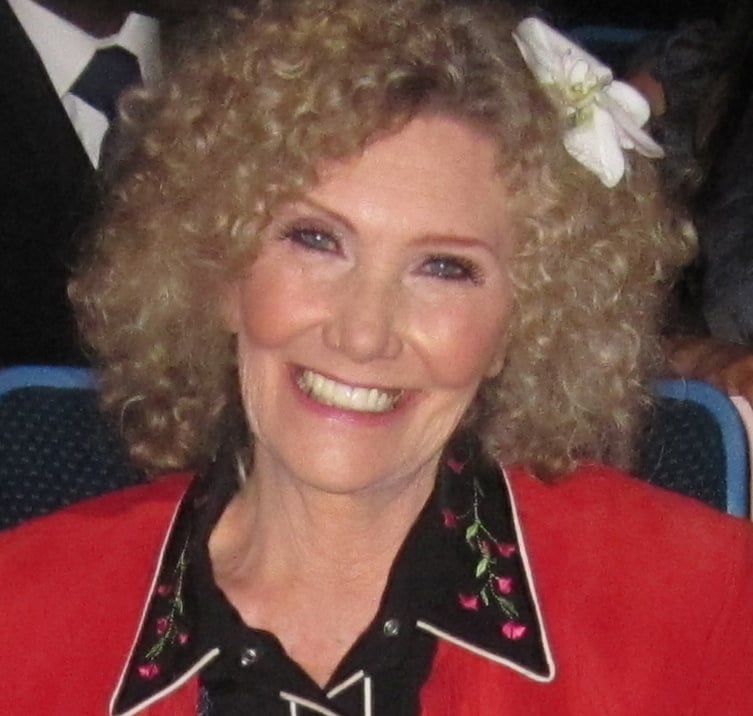
Carole Dean is president and founder of From the Heart Productions; a 501(c)3 non-profit that offers the Roy W. Dean Film Grants and fiscal sponsorship for independent filmmakers.
She is creator and instructor of Learn Producing: The Ultimate Course for Indie Film Production and Filmmaker Acountability Circle. Available on From the Heart’s new Thrive Education Platform for indie filmmakers.
She hosts the weekly podcast, The Art of Film Funding, interviewing those involved in all aspects of indie film production. She is also the author of The Art of Film Funding, 2nd Edition: Alternative Financing Concepts. See IMDB for producing credits