
Documentary Filmmaking Tips on Finding Your Story, Building Trust, and Working Within Your Budget
by Carole Dean
What if the documentary you are searching for is not thousands of miles away?
What if it is unfolding five miles from your home—at a community meeting, on a dangerous street, or among neighbors fighting over the future of their city?
Independent filmmakers often believe that a significant documentary must begin with a sweeping international subject, a famous central character, or a large production budget.
Cinematographer, producer, and director Ben Wolf offers another possibility: begin with a story you can reach, follow, understand, and afford to film—and then uncover the universal conflict inside it.
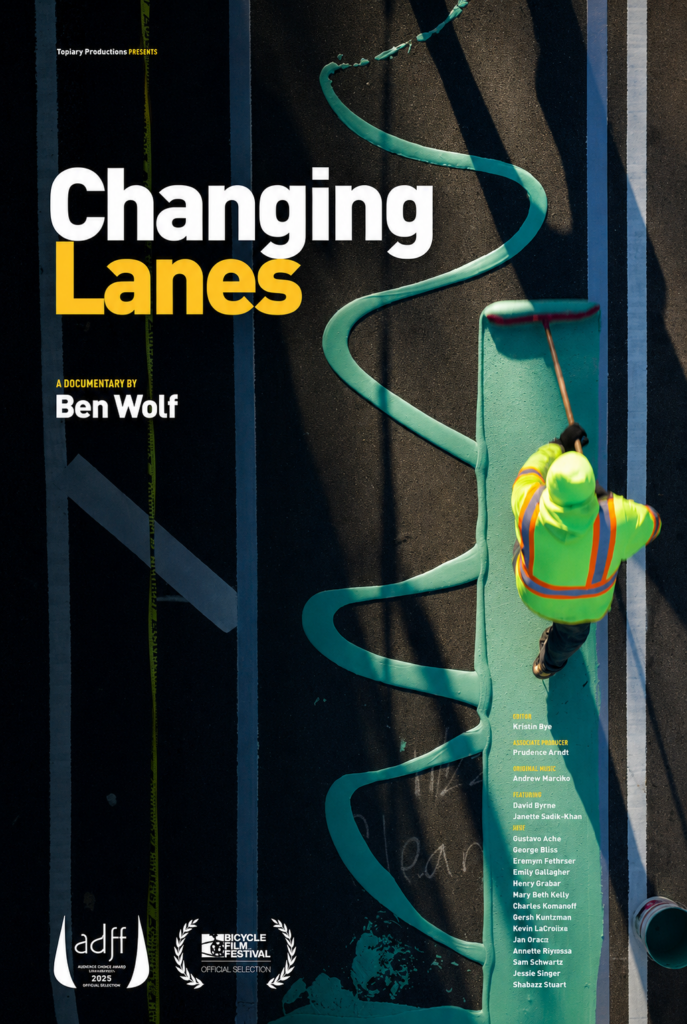
Ben joined Carole Dean on The Art of Film Funding Podcast to discuss his feature documentary directing debut, Changing Lanes. The film follows a bitter community struggle over the redesign of McGuinness Boulevard, a dangerous four-lane roadway in Greenpoint, Brooklyn.
The movement to transform the boulevard gained urgency after the tragic hit-and-run death of Matthew Jensen, a beloved local teacher.
What initially appears to be a film about traffic engineering and protected bicycle lanes gradually becomes a much larger story about grief, political power, public safety, commercial interests, grassroots activism, and the struggle to create change.
Ben’s journey offers important lessons for any filmmaker trying to find a subject, work within limited resources, earn trust, document conflict, and transform a local event into a compelling cinematic story.
Your Career May Be Preparing You in Ways You Cannot Yet See
Ben studied directing at Columbia University’s graduate film program in the late 1990s, with an emphasis on narrative filmmaking. Like many graduates, he quickly discovered that completing film school did not automatically create a directing career.
“It’s always a wake-up call when you leave film school and then you have to transition into a career,” he explained.
Instead of immediately becoming a director, he found work as a cinematographer. For approximately 25 years, he photographed documentaries, narrative films, and commercials. Documentary filmmaking eventually became especially meaningful to him because he believed the work could make a positive difference in the world.
For filmmakers frustrated that they have not yet reached the position they imagined for themselves, his experience is encouraging. The work you are doing now may not be a detour. It may be your training.
As a cinematographer, he learned to observe human behavior, anticipate action, visualize a story, work with small crews, recognize character and conflict, and make rapid creative decisions. He was regularly working beside directors and helping them determine what needed to be filmed.
“In either case, you’re telling stories,” he said of narrative and documentary filmmaking. “You’re leading an audience along, you’re engaging them.”
The lesson is important: do not discount the skills you are acquiring because your current title is not the title you ultimately want.
An editor is learning structure. A cinematographer is learning visual storytelling. A field producer is learning access and relationships. A sound recordist is learning how to listen. A production manager is learning how to turn an idea into a workable plan.
Every project can prepare you to lead your own.
Look for a Story That Is Meaningful and Achievable
Wolf continued to dream of directing, but earning a living by working on other people’s productions left little time to develop his own film. The interruption caused by the pandemic finally gave him an opportunity to reconsider what he wanted to create.
He began with a practical question:
“What is a documentary that would be meaningful to me and also achievable?”
That question should be written at the top of every independent filmmaker’s development notebook.
A film must matter to you, but it must also be possible to make. Wolf knew that his limited personal resources made a local story the most realistic choice. However, he did not want “local” to mean small or insignificant. He wanted a specific subject that could become “a microcosm for bigger issues.”
That is exactly what he found.
“I seem to have maybe by instinct or luck found a very specific local story of a particular street in Brooklyn,” he said, “but I think very clearly it is a way into talking about larger political problems that we’re facing in our city and our country.”
This is an excellent producing strategy for filmmakers working with modest budgets. A nearby story can reduce travel, lodging, transportation, equipment, and crew expenses. More importantly, proximity allows the filmmaker to return repeatedly, develop relationships, capture events as they unfold, and recognize changes that an occasional visitor might miss.
Ben followed the McGuinness Boulevard conflict for approximately three years. Living only about five miles away allowed him to attend meetings and community events without mounting a major production every time something happened.
Your limitation may be pointing you toward your production model.
Instead of asking, “How can I raise enough money to travel across the world?” consider asking, “What powerful story is unfolding within driving distance of my home?”
Find the Moment That Reveals the Real Conflict
Wolf did not immediately know that McGuinness Boulevard would become the focus of his film. He began exploring broader questions about cycling, street safety, transportation, and the changing streets of New York. He attended meetings and filmed discussions about several different street projects.
Then one meeting changed everything.
A private business organized what was presented as a public meeting concerning McGuinness Boulevard. According to Ben, the organizers locked the doors and prevented people who disagreed with them from entering.
“It was so over the top,” he recalled. “I thought, ‘Okay, this really looks like a story that’s going to be interesting to follow.’”
This was more than an unusual meeting. It revealed the components of a documentary story:
Conflict: Two sides wanted very different futures for the boulevard.
Stakes: People believed lives, businesses, transportation access, and the future of the neighborhood were at risk.
Characters: Activists, business owners, public officials, residents, planners, drivers, cyclists, and pedestrians all had something to gain or lose.
Uncertainty: No one knew which side would prevail or whether the proposed safety improvements would survive political pressure.
A larger question: Who has the power to determine how public space is used?
A subject becomes a story when something is changing, someone wants that change, someone opposes it, and the outcome remains uncertain.
When researching your documentary, look for the moment when people stop merely discussing an issue and begin fighting over what will happen next. That is often where your narrative begins.
Use the Camera That Gives You Access
Documentary filmmakers frequently become preoccupied with image quality. Wolf’s experience is a reminder that the most sophisticated camera is not always the best camera for the situation.
At heated public meetings, he sometimes filmed with his phone rather than arriving with a large professional camera package.
“I didn’t want to draw attention to myself,” he explained. “I just wanted to capture what was going on.”
He used different cameras and devices throughout the production, choosing what was appropriate for each situation. A larger camera might have produced a more polished image, but it also could have changed people’s behavior, attracted opposition, or intensified an already volatile meeting.
“It may not look quite as nice as using bigger cameras, but everything is a trade-off,” he suggested.
That is a fundamental documentary principle: the technical choice must serve the story.
Ask yourself:
Will this camera help me enter the room?
Will it intimidate the participant?
Will people perform for it?
Can I respond quickly when something unexpected happens?
Will the equipment distance me from the people whose trust I need?
A beautiful image is valuable, but an imperfect image of an irreplaceable moment may be far more important to your film.
Research Gives a Local Story Its Larger Meaning
Following events is not enough. A filmmaker must understand what those events mean.
As he documented the fight over McGuinness Boulevard, Ben began reading extensively about New York infrastructure and political history. He studied Robert Moses and the decisions that shaped the city’s streets. He investigated how McGuinness Boulevard resembled—or differed from—other transportation battles.
“It became increasingly clear to me that to tell this story well involved giving good context, good historical context,” he said.
That research helped him identify expert voices who could broaden the film.
He interviewed Janette Sadik-Khan, the former New York City transportation commissioner associated with major pedestrian, cycling, and public-space changes. He also spoke with transportation expert Sam Schwartz.
He brought musician and cycling advocate David Byrne into the film to help compare New York with cities around the world. Byrne’s international experience gave the documentary another perspective without pulling it away from its central Brooklyn story.
This is an important lesson in selecting experts. Do not add recognizable names merely to decorate your pitch deck. Ask what each person contributes.
One expert may explain history. Another may interpret policy. Another may provide emotional credibility. A cultural figure may help an audience understand why the subject matters beyond the immediate community.
Every interview should perform a clear narrative function.
Treat Grief as a Human Experience, Not a Plot Device
The campaign to redesign McGuinness Boulevard was intensified by the death of Matthew Jensen. Ben understood that a fatality could not simply be used as an “inciting incident” and then forgotten as the political battle took over.
Documentaries dealing with loss require more than technical skill. They require judgment, patience, empathy, and sensitivity.
“A lot of documentary filmmaking,” he advised, “comes down to almost intangible aspects of sensitivity to other people—just how you conduct yourself on every shoot and every time you interview anybody.”
Mary Beth Kelly became an important emotional presence in the film. Her husband was killed by a truck while they were cycling together. Rather than allowing tragedy to silence her, she transformed her grief into activism and became a leader in New York’s safe-streets movement.
Ben was moved by people who convert personal loss into constructive action.
“These terrible events can be motivation to make positive change,” he said.
For filmmakers, the ethical question is not simply whether someone will agree to an interview. The deeper question is how the film will honor that person’s trust.
Do not rush participants into recounting trauma. Do not reduce them to their worst experience. Give them the space to express their intelligence, humor, courage, contradictions, and agency.
The people in your documentary are not devices that exist to advance your narrative. They are human beings who will continue living with the film after you finish it.
Fairness Means Offering People a Genuine Opportunity to Participate
Changing Lanes examines a polarized political conflict. Supporters of the redesign organized through Make McGuinness Safe, while opponents aligned with Keep McGuinness Moving.
Wolf said he was repeatedly asked which side he supported. His answer was that he was a pedestrian, cyclist, and driver and believed streets should accommodate all those activities.
Although he acknowledged that his sympathies were stronger toward those advocating change, he tried to treat participants respectfully and give each side an opportunity to explain its position.
The pro-change group was open to participating. The opposing organization was more difficult to engage. Wolf filmed some of its events and repeatedly offered its representatives an opportunity to be interviewed, but they never fully accepted.
“I gave them ample opportunities,” he explained. “Ultimately, that’s all you can do. You can ask, and I did many times.”
This is a valuable lesson for documentary filmmakers. Fairness does not require you to force someone to participate, and it does not require you to pretend that all claims are equally supported.
It requires a sincere effort to understand the competing positions, careful documentation of your outreach, and an honest presentation of what you discover.
When a reluctant participant later complains about the film, your emails, invitations, follow-ups, and production records can demonstrate that you made a good-faith effort to include that perspective.
Investigate Who Is Really Behind the Message
One of the larger issues Wolf encountered was the difference between grassroots organizing and “astroturfing.”
A grassroots campaign grows organically from people directly affected by an issue. An astroturf organization attempts to appear community-driven while being supported or directed by powerful commercial or political interests.
Wolf did not object to businesses defending their interests. His concern was transparency.
“If your concern is it’s going to be hard for you to get your trucks into your business, then just say it,” he argued.
For documentary filmmakers investigating controversial issues, the public message is only the beginning. You must also ask:
Who created this organization?
Who provides its funding?
Who benefits from its position?
Are its leaders local residents, paid consultants, political operatives, or business representatives?
Does the organization’s public language match its private interests?
Who is absent from its meetings?
Who is being denied access?
Following money, ownership, relationships, and influence can reveal the true structure of a conflict.
Seven Lessons Filmmakers Can Apply Now
Ben Wolf’s journey from cinematographer to feature documentary director offers a practical roadmap:
- Use the skills you already possess. Your current role may be preparing you to direct, produce, or lead your own film.
- Choose a film that is both meaningful and achievable. Ambition is essential, but a realistic production model gives the story a chance to be completed.
- Search close to home. Proximity can reduce expenses while increasing access, trust, and the amount of time you can spend with the story.
- Identify active conflict. A strong documentary needs stakes, opposing forces, compelling characters, and an uncertain outcome.
- Let access guide your equipment choices. The best camera is the one that allows you to capture the essential moment without damaging the situation.
- Research beyond the immediate event. History, politics, economics, and expert knowledge can transform a neighborhood story into a universal one.
- Approach participants with sensitivity and fairness. Offer different sides a genuine opportunity to speak, but do not confuse fairness with false equivalence.
Your Story May Already Be Waiting for You
You do not need to begin with unlimited financing, international travel, or a famous subject.
You need curiosity. You need access. You need a meaningful conflict. You need the discipline to keep returning. Most importantly, you need the ability to recognize that a seemingly small event may contain a much larger human story.
A dangerous boulevard in Brooklyn became a window into grief, democracy, political division, commercial influence, public safety, and the question of who controls the future of a community.
That is what documentary filmmakers do at their best. They look closely at one place, one conflict, or one group of people—and reveal something much larger about all of us.
Your next film may not be hiding in a distant country or behind a locked studio door.
It may be happening on the street outside your home.
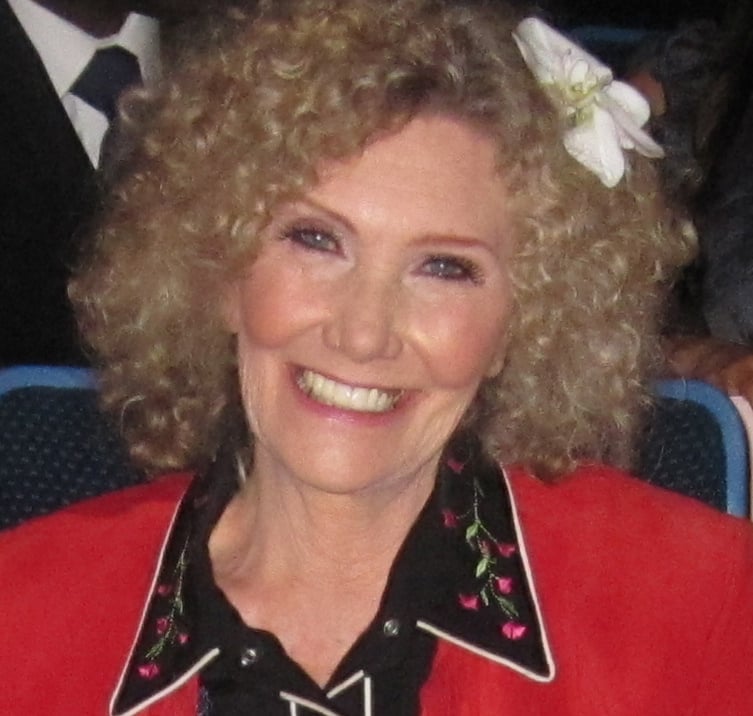
Carole Dean is president and founder of From the Heart Productions; a 501(c)3 non-profit that offers the Roy W. Dean Film Grants and fiscal sponsorship for independent filmmakers.
She is creator and instructor of Learn Producing: The Ultimate Course for Indie Film Production and Filmmaker Acountability Circle. Available on From the Heart’s new Thrive Education Platform for indie filmmakers.
She hosts the weekly podcast, The Art of Film Funding, interviewing those involved in all aspects of indie film production. She is also the author of The Art of Film Funding, 2nd Edition: Alternative Financing Concepts. See IMDB for producing credits